Good work notes make the next move obvious. These copyable layouts separate decisions, actions, owners, and unanswered questions so a daily note or meeting record does not become a paragraph you never revisit. Choose one layout for the work in front of you, then keep the fields consistent.
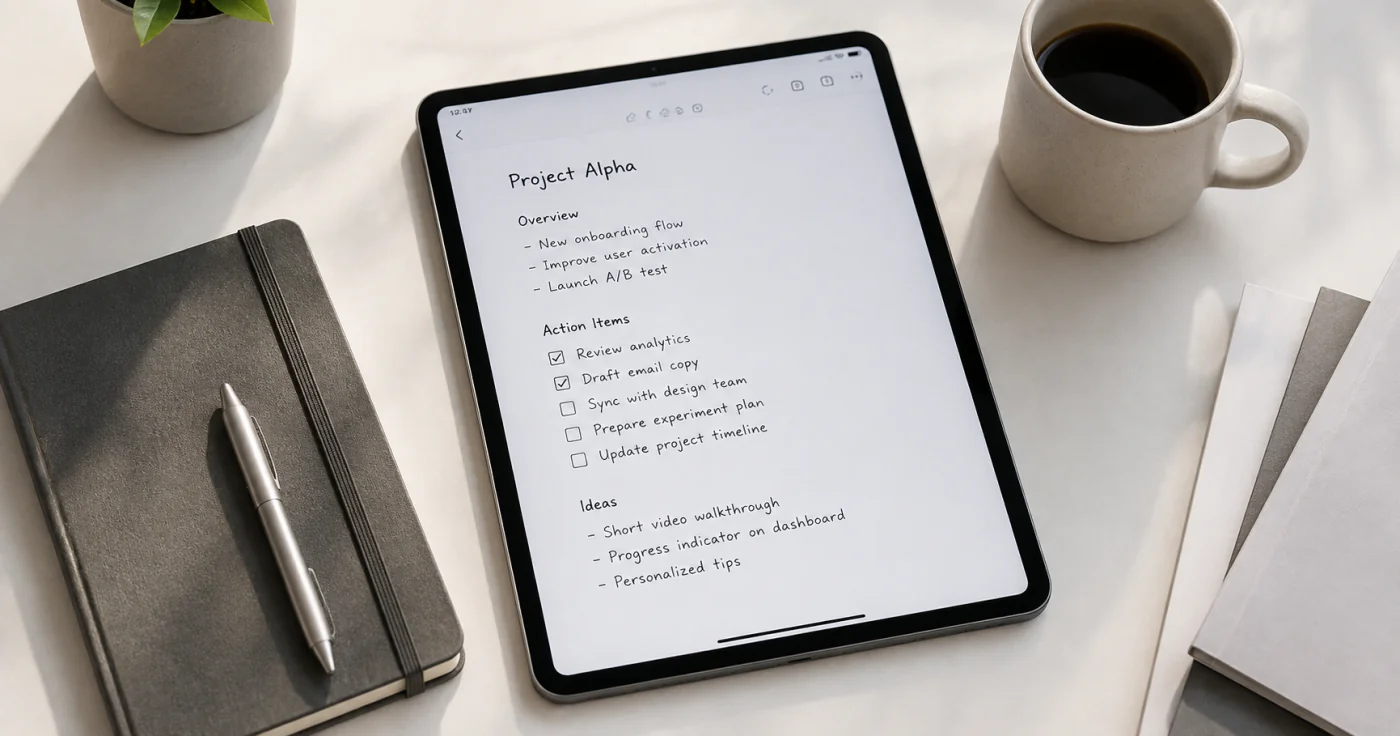
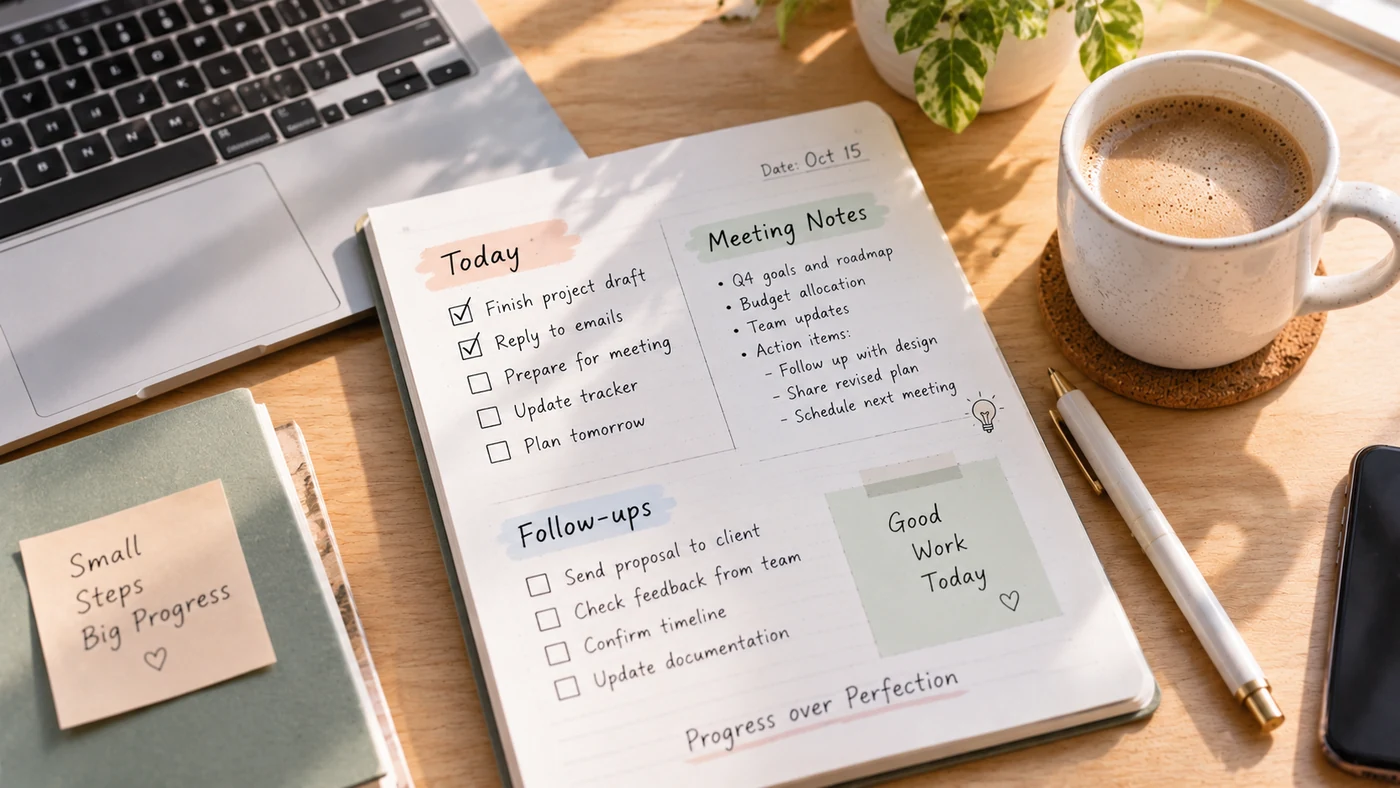
Daily work note
DATE:
TODAY'S OUTCOME:

TOP THREE PRIORITIES:
1.
2.
3.

BLOCKERS OR DEPENDENCIES:

END-OF-DAY HANDOFF:
Use this when the main risk is losing focus. Define one outcome before listing tasks, then write a short handoff note before you stop.
Project update
PROJECT:
CURRENT STATUS:

CHANGED SINCE LAST UPDATE:
DECISIONS MADE:
NEXT ACTIONS: Action | Owner | Date
RISKS OR OPEN QUESTIONS:
This layout helps a reader tell the difference between information, decisions, and commitments. Do not turn every observation into an action item.
Meeting follow-up
MEETING:
PURPOSE:

KEY DECISIONS:
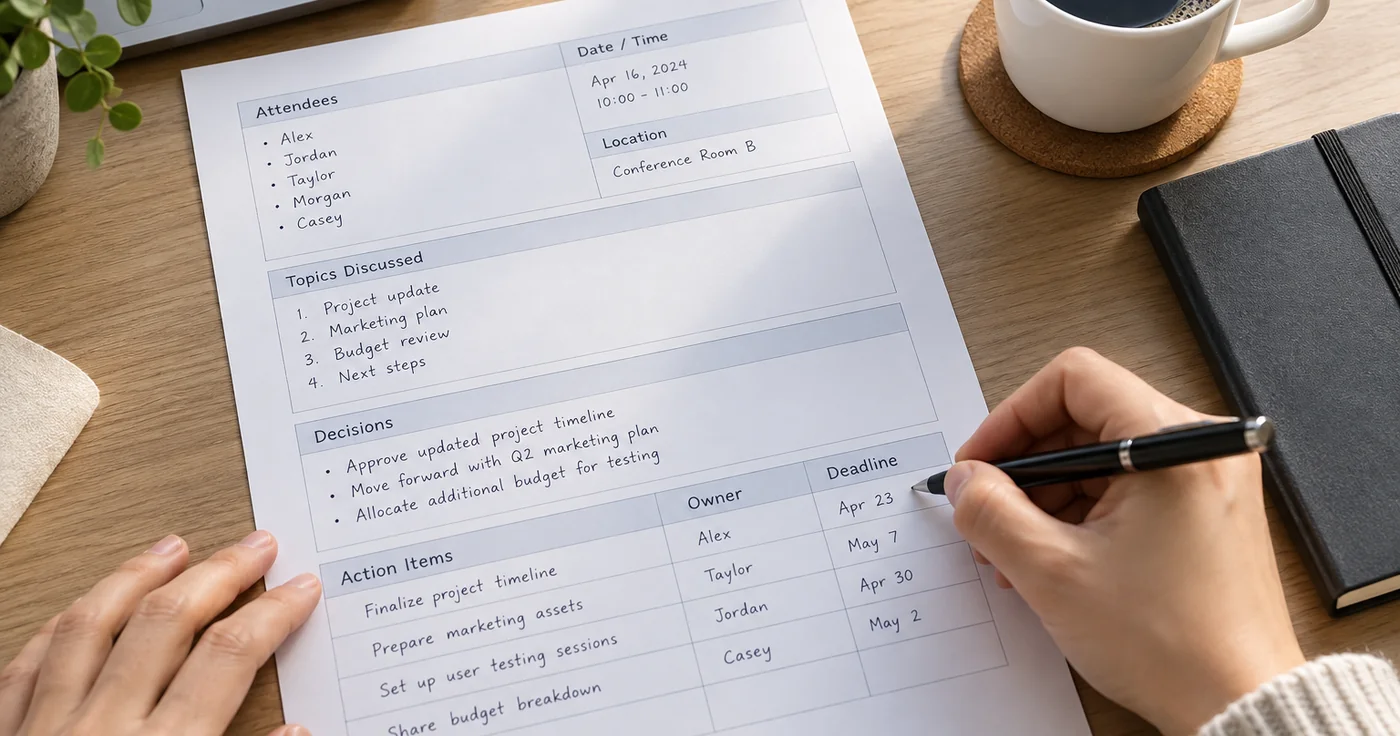
ACTION ITEMS: Action | Owner | Due date
QUESTIONS TO RESOLVE:
NEXT CHECK-IN:
For a fuller meeting workflow, see how to take meeting notes. To develop a consistent approach across your work, see our guide to work notes. Once notes accumulate, these organization ideas can help you make them retrievable.
Frequently Asked Questions
What is the best format for notes?
The best format is the smallest one that supports the next decision. For daily work, use outcome, priorities, blockers, and handoff. For a meeting, use decisions, action items, owners, and dates. Templates should be adapted to the situation rather than treated as a universal method.[1]
Conclusion
Use a work note layout to turn conversation and thought into a clear record of what changed and what happens next. If a field is never used, remove it rather than letting the layout become overhead.
References
- Australian National University. "Note-taking template"