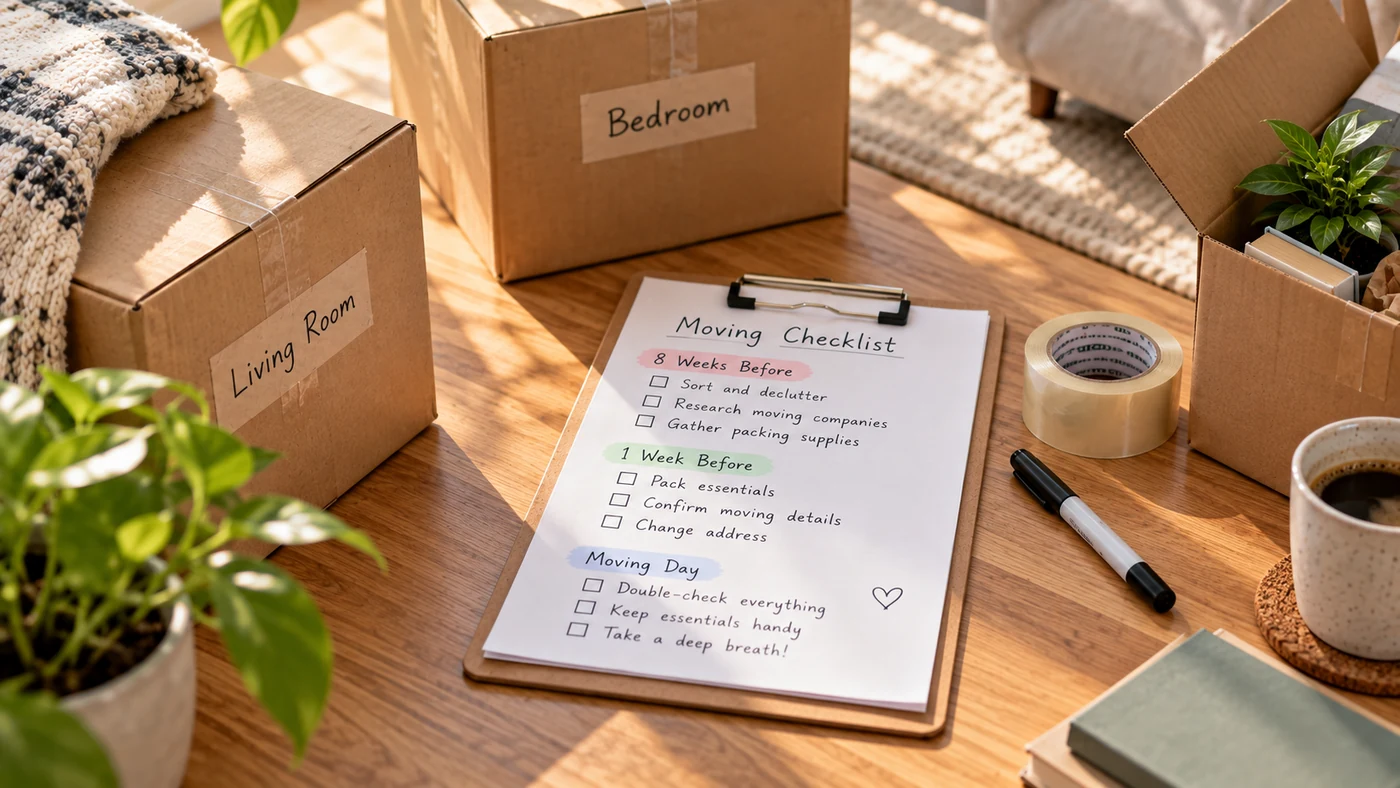
A moving checklist works best when it starts before boxes appear. Use this timeline to separate decisions, address changes, utilities, packing, and move-in tasks so that the final week is for confirmation rather than panic.
Eight to Six Weeks Before
- Confirm the move date, notice period, and access rules for both homes.
- Decide whether you are moving yourself, asking friends for help, or hiring movers; get written estimates if relevant.
- Sort one category at a time: keep, sell, donate, recycle, or discard.
- Start a folder for lease papers, mover documents, receipts, and utility account details.
- Identify large, fragile, or high-value items that need special handling.
If you rent, add a branch to the list for notice, deposit documentation, and the handover process. If you own, replace that branch with closing, insurance, and service-transfer tasks. This keeps a generic timeline from becoming a list of irrelevant errands.
If you need a simple way to turn this into personal tasks, begin with this guide on how to make a checklist. The goal is not to copy someone else’s move; it is to expose decisions early enough to act on them.
Five to Three Weeks Before
- Book the mover, truck, elevator slot, or parking arrangements that apply to your building.
- Arrange utilities and internet according to the provider’s lead times.
- Notify employers, schools, insurers, banks, subscriptions, and other services that need your new address.
- Begin with low-use rooms, seasonal belongings, and books. Label each box with its destination room and a short contents note.
- Set aside documents, medication, keys, chargers, and valuables that will travel with you.
For U.S. residents, the Postal Service provides an official address-forwarding process; check its current requirements directly rather than relying on an old checklist.[1]
Two Weeks Before
- Confirm arrival windows, payment expectations, and contact numbers with anyone helping you move.
- Measure doorways and the destination space for furniture that may not fit.
- Use up frozen and perishable food where practical.
- Prepare an essentials box for the first night: water, basic toiletries, bedding, towels, chargers, a small tool kit, and cleaning supplies.
- Photograph the condition of a rental if your lease or local rules make that useful.
Label the essentials box clearly and keep it out of the moving truck. Also prepare a small “open first” set for each person or pet: medication, a change of clothes, documents, and anything needed for the first 24 hours.
One Week Before Moving Day
- Reconfirm transport, building access, and key pickup.
- Finish most packing and leave only daily-use items out.
- Separate important documents and valuables from boxes going on the truck.
- Pay or schedule final bills that cannot wait.
- Share a reachable phone number with the mover or helper and keep directions available.
Moving Day and the First Week In
On moving day, take a final room-by-room look before leaving, record meter readings when relevant, and keep the essentials box with you. At the new home, check boxes against labels before signing a delivery record. During the first week, test smoke alarms and essential appliances, locate shutoff information if available, update the list of issues for a landlord or manager, and unpack the rooms you use first.
A room-by-room exit check
- Open every cupboard, drawer, closet, and storage area
- Check balconies, garages, mailboxes, and shared storage if applicable
- Take final photos when they support your handover record
- Return every key, fob, parking pass, and borrowed item
- Leave forwarding contact details where required
Keep the Timeline Usable
Use one list for decisions and another for errands that have dates. A weekly planning rhythm can prevent small tasks from vanishing; these daily checklist ideas and this guide on planning your week are useful starting points. If you use EasyNotes, a checklist can live in one note and a time-sensitive item can have its own recurring reminder or Widget—without treating the plan as a shared editing tool.
Frequently Asked Questions
What is the best moving checklist?
The best moving checklist is one arranged by time and adjusted for your housing, distance, and moving method. It should include administrative changes, transport, packing, first-night essentials, and a short move-in follow-up—not just boxes to pack.
What should I include one week before moving?
Confirm transport and access, finish nonessential packing, separate documents and valuables, handle remaining bills, prepare first-night supplies, and keep contact details handy. Avoid scheduling major new projects in this final week.
Conclusion
A calmer move comes from moving decisions forward in time. Start with the date and logistics, then reduce belongings, pack by room, and reserve the final week for confirmation and essentials.
References
- United States Postal Service. "Official USPS Change-of-Address Form"