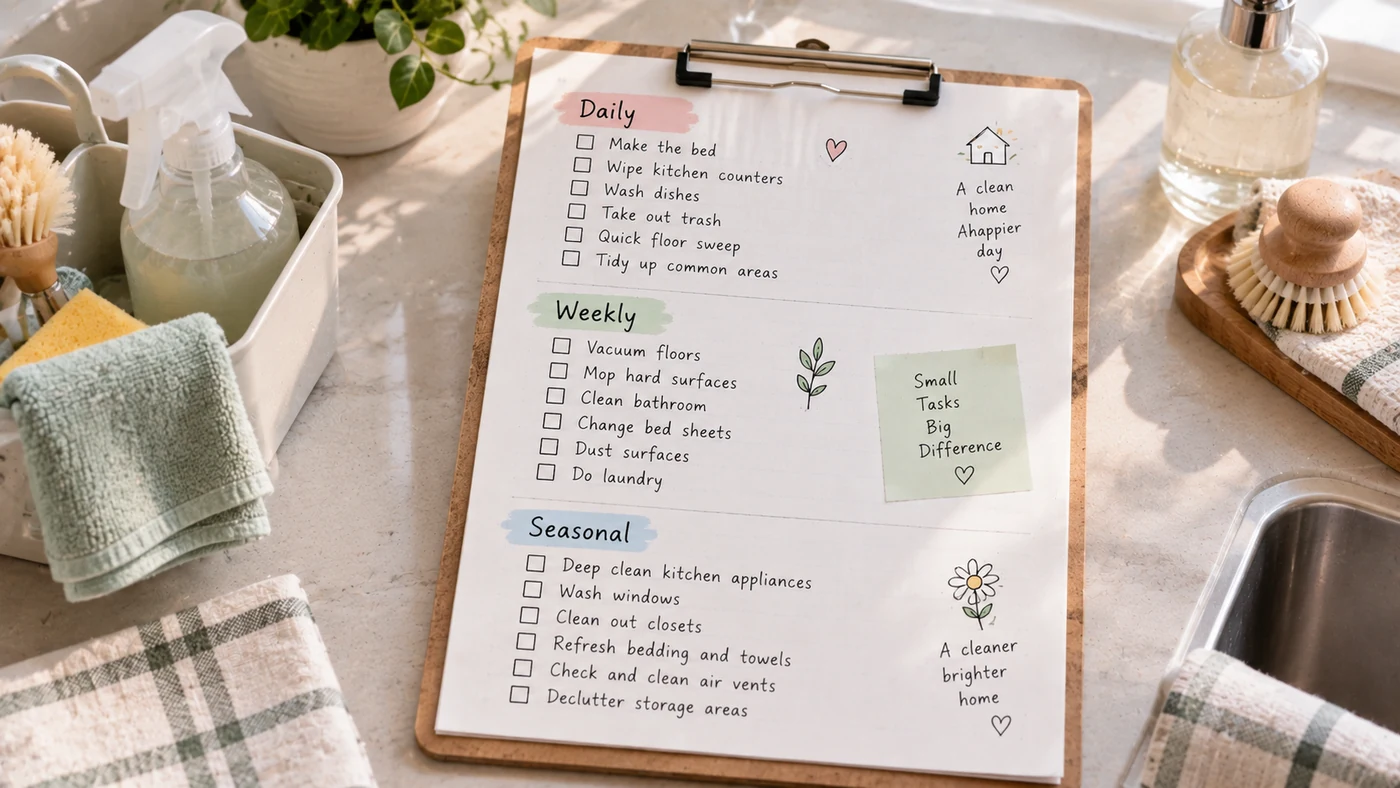
A house cleaning checklist is easier to follow when it matches how often a space is used. Put short reset tasks on daily or weekly rhythms, reserve less-used areas for monthly checks, and save deep cleaning for a seasonal pass.
Daily: Reset the Spaces You Use
- Put away dishes or load the dishwasher.
- Wipe food-prep surfaces after use.
- Clear obvious clutter from the entry, living area, and bathroom counter.
- Deal with spills and wet towels before they become a larger job.
- Do a brief floor check in high-traffic areas.
Daily does not mean perfect. It means leaving tomorrow’s routine easy to start.
Weekly: Clean the Working Parts of the Home
- Clean the toilet, sink, and shower or tub surfaces.
- Dust reachable surfaces and vacuum or sweep main floors.
- Change bed linens and wash frequently used towels.
- Empty bins, wipe handles and switches as needed, and clean the kitchen sink.
- Check the refrigerator for old food and make a short grocery plan.
The exact list changes with pets, children, shared bathrooms, and how often you cook. A useful weekly list is short enough to finish or deliberately split over several days.
Monthly and Seasonal: Prevent the Forgotten Jobs
Each month, choose a few less-visible tasks: wipe inside the microwave, clean the refrigerator shelves, dust vents and baseboards, inspect pantry items, and vacuum under movable furniture. Each season, rotate a deeper set such as windows, curtains, high shelves, storage areas, and outdoor entry points.
Monthly checklist
- Clean refrigerator shelves and discard expired food
- Wipe cabinet fronts, doors, and baseboards
- Vacuum under furniture you can move safely
- Clean the microwave, small appliances, and waste bins
- Check pantry staples, cleaning supplies, and laundry products
Seasonal checklist
- Wash curtains or clean blinds according to their care labels
- Clean windows, tracks, and screens when conditions allow
- Sort one storage area and donate or recycle unused items
- Vacuum upholstery and reach high dusting points safely
- Review outdoor entry areas, mats, and seasonal gear
When you need a deeper clean
Choose one room at a time. Work from high surfaces to low, then clean the floor last. Deep cleaning is useful after illness, a move, a long period of neglect, or before guests; it does not have to be a monthly obligation.
Cleaning and disinfecting are not identical: clean first, then use a disinfectant only when it is appropriate for the surface and follow the label directions.[1]
Make the Schedule Visible
Build the list around rooms and frequency, then place only this week’s jobs on your calendar or task list. These daily checklist ideas, a guide to making a checklist, and this approach to planning your week can help. In EasyNotes, one note can hold the household list and a recurring reminder can prompt a single task without claiming calendar synchronization.
Frequently Asked Questions
What is the 5-5-5 rule for cleaning?
Use it as a time box: choose five small areas, spend five minutes on each, and stop after roughly 25 minutes. It is helpful when a whole-home list feels too large, but it does not replace tasks that need more time.
What should I clean weekly at home?
Start with bathrooms, frequently used floors, kitchen surfaces and sink, bed linens, towels, bins, and areas affected by pets or cooking. Add tasks only when your household actually creates the need.
Conclusion
The best routine is one you can restart after a busy week. Keep daily jobs small, set a realistic weekly baseline, and rotate the deeper work through the year.
References
- Centers for Disease Control and Prevention. "Cleaning and Disinfecting With Bleach and Water"