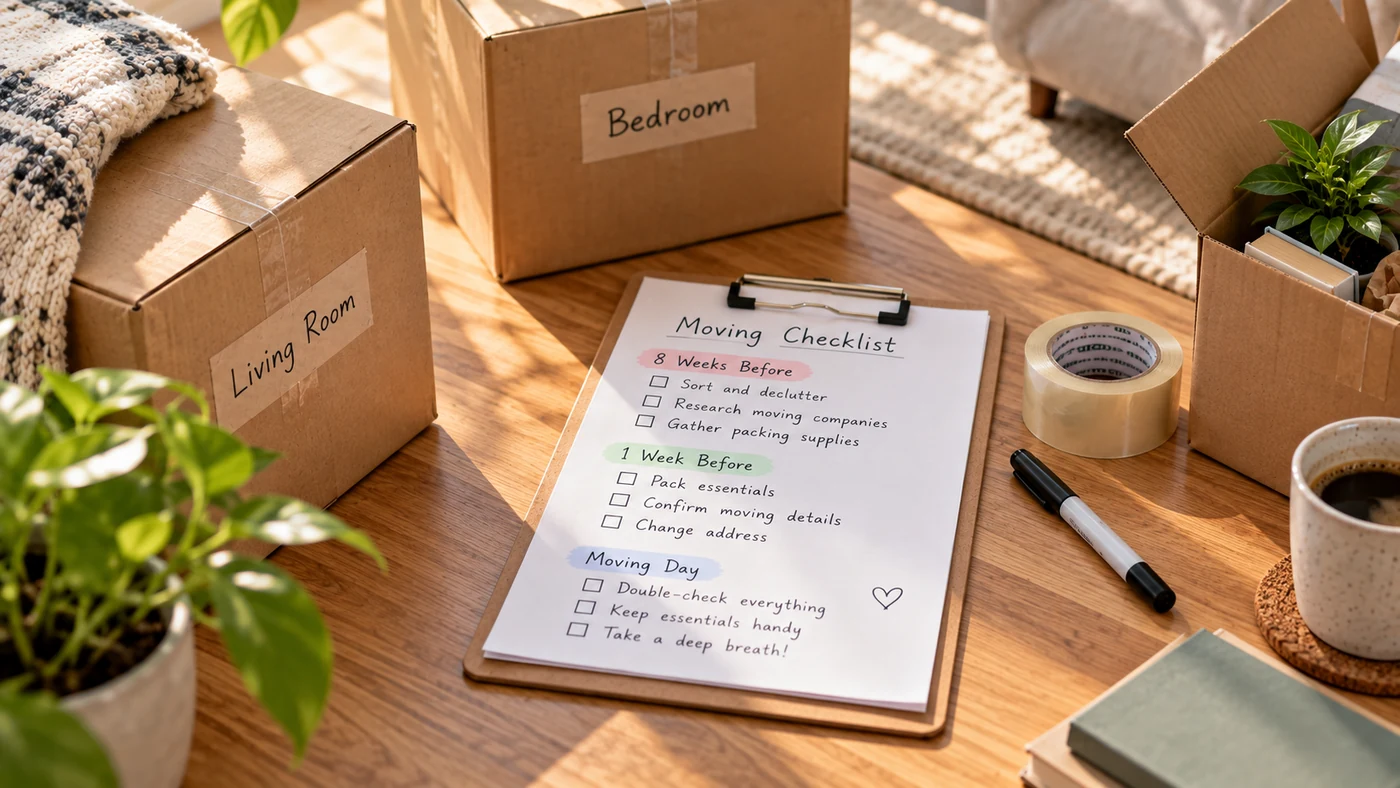
A first apartment checklist should begin with what makes the home safe and livable on day one—not with every item you might eventually want. Start with sleep, hygiene, food, cleaning, and a few basic checks, then add comfort items as your budget allows.
Before You Buy: Check the Apartment
- Confirm you have working keys for every required lock.
- Test doors and windows for normal opening, closing, and locking.
- Locate the smoke alarms and ask the landlord or manager how maintenance issues are reported.
- Make a dated move-in note of any condition questions you want the property manager to address.
- Write down due dates for rent, utilities, and renter’s insurance if you use it.
Before shopping, set a first-month limit that includes deposits, transport, food, and recurring bills. A room-by-room list is useful only after you know what remains for purchases.
For building systems or safety questions, use the property manager’s stated process and local guidance rather than treating a general checklist as an inspection.
First-Night Basics
Buy or bring these before move-in:
- Mattress or sleep surface, sheets, pillow, blanket, and a light source.
- Toilet paper, hand soap, towel, shower curtain if needed, and basic toiletries.
- Drinking water, a mug or cup, a plate, bowl, cutlery, and simple food.
- Phone charger, power strip where safe to use, trash bags, and basic cleaning supplies.
- First-aid supplies and a flashlight.
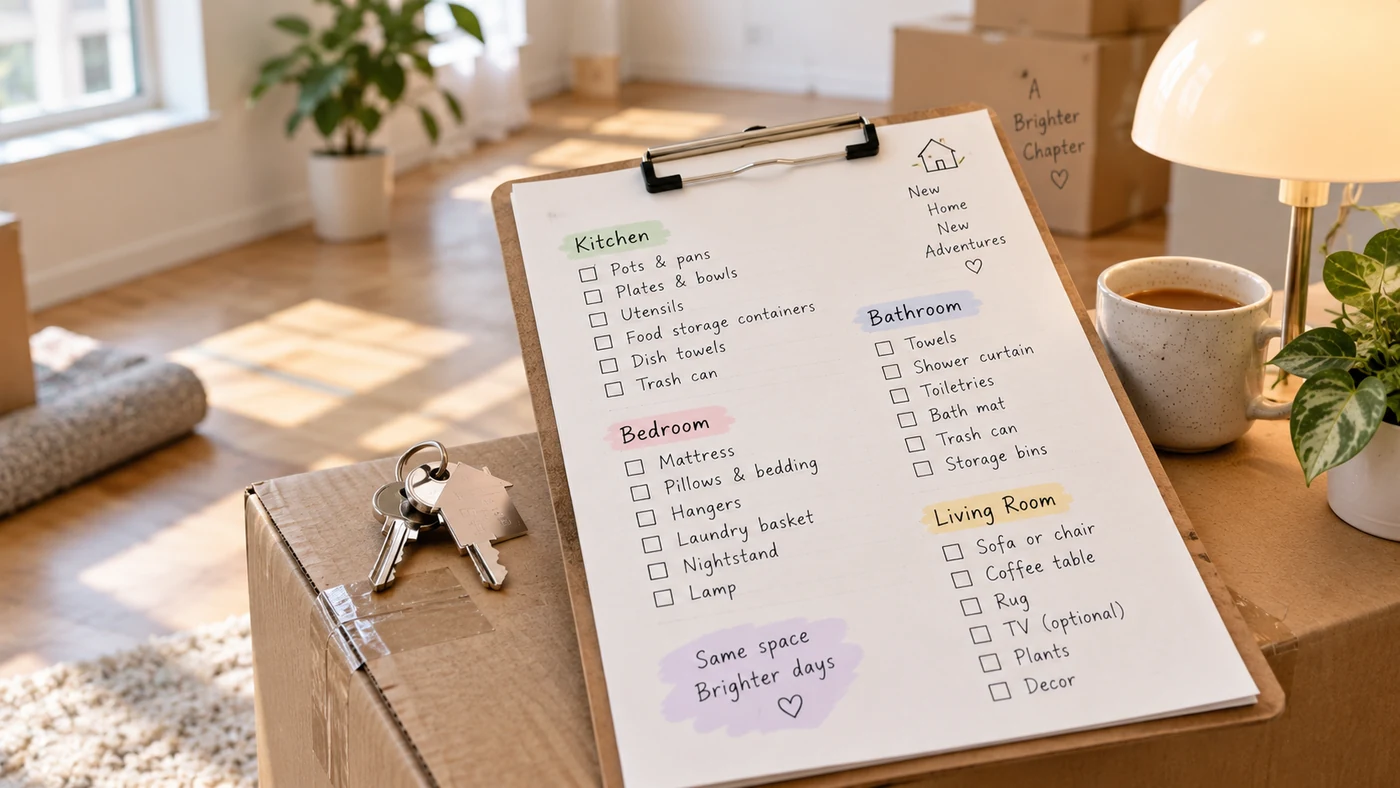
Room-by-Room Essentials
Kitchen
- One pan and one pot.
- Can opener, knife, cutting board, spatula, and measuring cup.
- Plates, bowls, cups, utensils, food containers, dish soap, sponge, and dish towel.
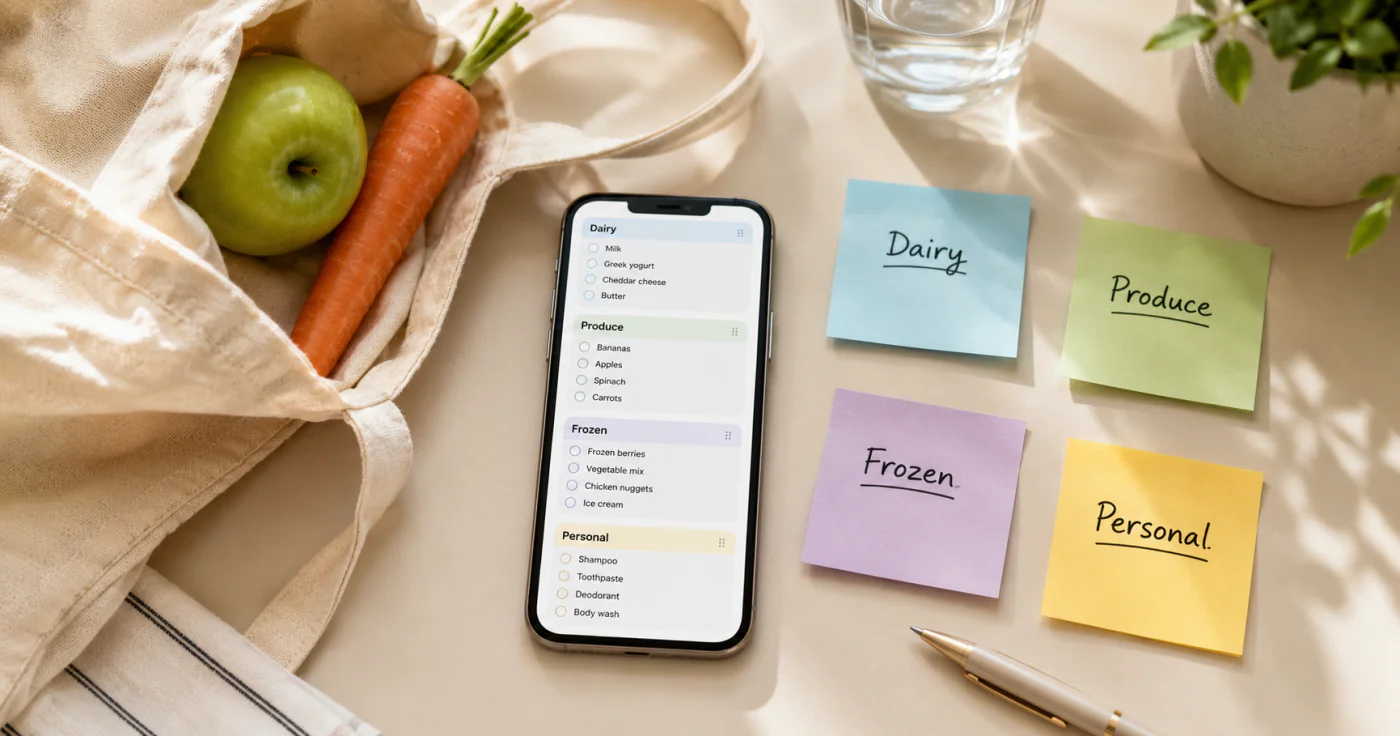
- A short starter grocery list. Use this grocery-list guide to avoid buying food you will not use in the first week.
Bathroom and Laundry
- Bath towel, hand towel, bath mat, plunger, toilet brush, and bin.
- Laundry basket, detergent, and a drying method that fits the home.
- Cleaning cloths and an all-purpose cleaner suitable for the surfaces you have.
Bedroom and Living Area
- Bedding and a place to store daily clothes.
- A chair or other usable seat and a small surface for meals or work.
- Curtains or temporary privacy coverage if the apartment does not provide it.
- Extension only after you know the outlet locations and do not overload it.
Utilities, Documents, and Everyday Systems
- Confirm how electricity, water, internet, and waste collection are billed.
- Save the property manager’s repair contact and the building’s emergency procedure.
- Keep a copy of your lease, move-in condition record, and payment receipts.
- Put rent, utilities, and recurring household purchases in a simple monthly budget.
- Make a short list of nearby essentials: pharmacy, grocery store, transport stop, and laundry option.
Delay These Until You Know the Space
Large decor, duplicate cookware, specialty appliances, and storage systems can wait. Live in the apartment briefly, measure the actual space, and identify what you use every day. A budget works better when it starts with regular costs and a realistic spending limit.[1]
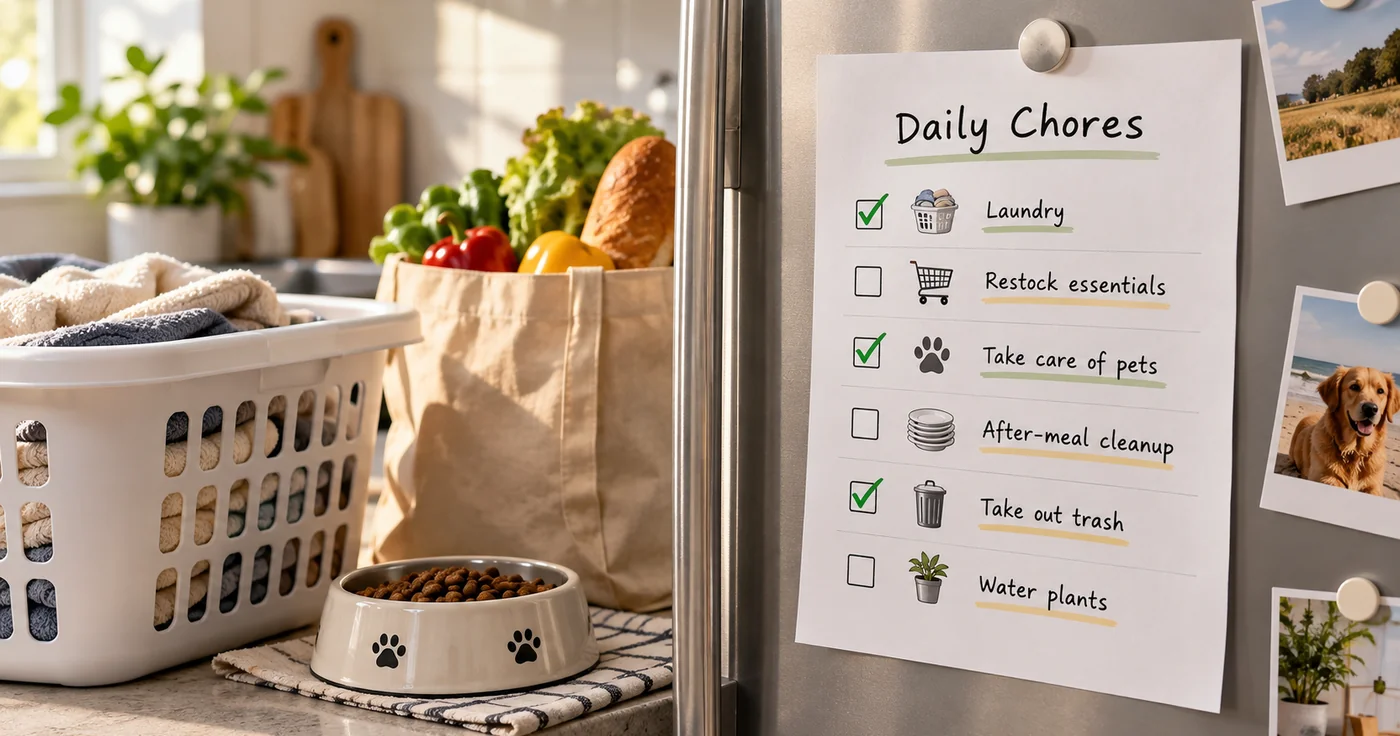
Keep a running list rather than making one huge shopping trip. This checklist guide, these shopping-list ideas, and daily checklist ideas can help separate urgent purchases from later upgrades.
Frequently Asked Questions
What do you actually need for your first apartment?
You need a safe place to sleep, basic bathroom supplies, enough kitchen items to make simple meals, cleaning and trash supplies, light, chargers, and a small emergency kit. Furniture and decor can grow from there.
What safety checks are crucial for a new apartment?
Check that doors and windows lock and operate normally, identify smoke alarms, report visible damage promptly, understand how to request repairs, and keep any required keys accessible. Ask the property manager about building-specific safety procedures.
Conclusion
Your first apartment does not need to look finished on move-in day. Prioritize the items that let you sleep, eat, clean, and handle ordinary problems, then make the space your own over time.
References
- Consumer.gov. "Making a Budget"