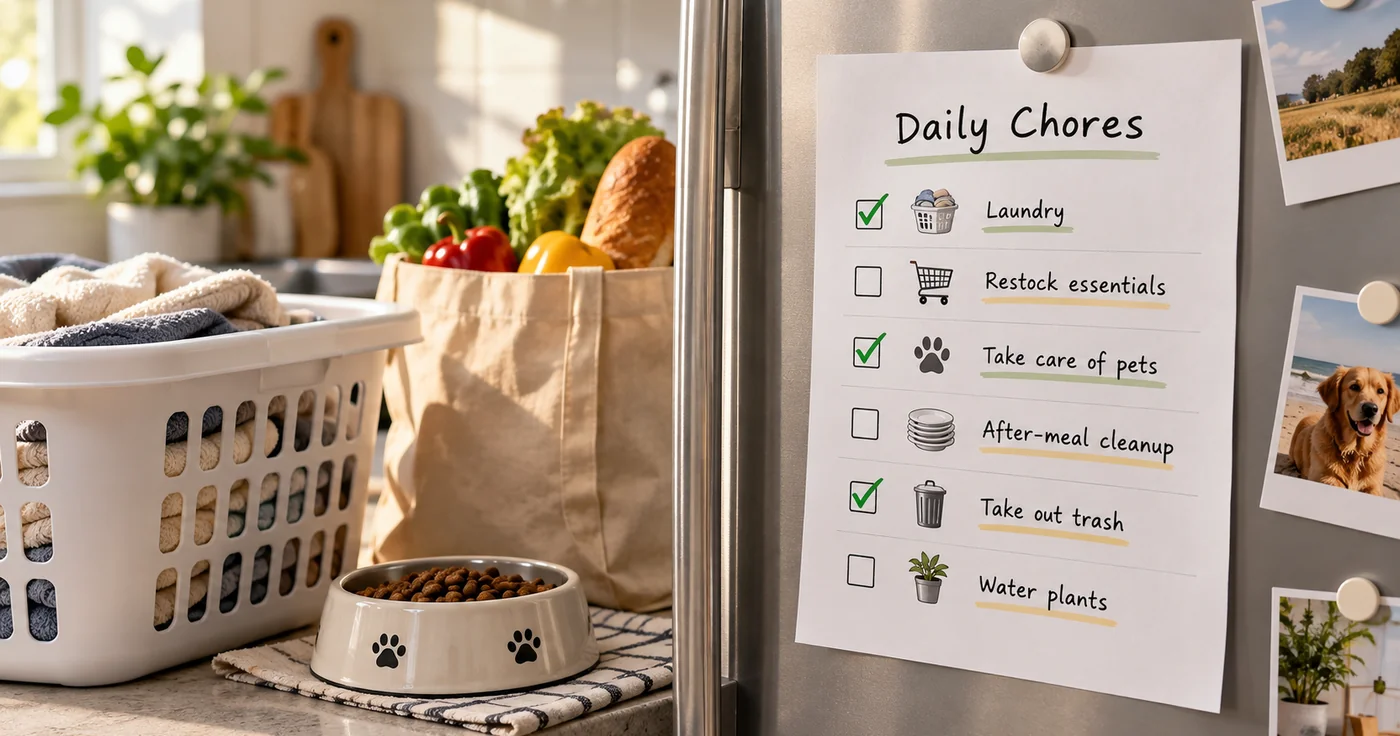
A useful daily chore list covers the small jobs that keep a home moving—not just cleaning. Start with recurring essentials such as dishes, laundry, meals, restocking, pet care, and a short evening reset. Then assign each task to one person or give it a clear rotation. Use the personal version below for your own routine, or adapt the household version so everyone can see what is theirs today.
What belongs on a daily household chore list?
Keep the list limited to tasks that genuinely recur every day or prevent a small issue from becoming tomorrow’s problem. A household chore list can include:
- Kitchen and meals: clear dishes after meals, load or unload the dishwasher, wipe the table, put away food, and check whether anything needs to be added to the grocery list.
- Laundry and clothing: move a load to the next stage when needed, put away dry clothes, or gather items for the next wash. Laundry does not need to mean running a full load every day.
- Pets: feed pets, refresh water, clean a litter area, or prepare supplies for a walk. Tailor this section to the animals in the home.
- Restocking: replace toilet paper, soap, or kitchen basics when low; return shared supplies to their usual place.
- Shared-space reset: return frequently used items, clear the entryway, and take out rubbish or recycling when the container is full or collection requires it.
Cleaning routines such as vacuuming every room or scrubbing a bathroom are better planned on a weekly or periodic schedule. See the house cleaning checklist for room-by-room cleaning tasks and frequency.
Copyable personal daily chore list
Use this as a starting point, not a rule that every item must happen every day. Remove anything that does not fit your home and add the one task you tend to forget.
PERSONAL DAILY HOME RESET

Kitchen
[ ] Clear dishes after meals
[ ] Wipe table or main counter
[ ] Put away food

Laundry and belongings
[ ] Move or put away laundry if needed
[ ] Return shared items to their place

Home basics
[ ] Check pet food and water
[ ] Replace a low household essential
[ ] Take out rubbish if needed

One extra task for today: __________________
The “if needed” wording matters: it keeps the list from turning optional jobs into daily obligations. If the day is busy, choose the few items that matter most and leave the rest for the next reset.
Copyable household chore list with clear ownership
For a shared home, add an owner and a time or trigger. “Someone should do the dishes” is easy to overlook; “Alex clears dinner dishes” makes the handoff visible. Rotate tasks that no one wants to own permanently, and agree on what “done” means for recurring jobs.
HOUSEHOLD DAILY CHORES
Date: __________

Task                         Owner        Done
After-meal dishes            __________   [ ]
Wipe table / kitchen surface  __________   [ ]
Pet care                     __________   [ ]
Laundry step, if needed      __________   [ ]
Restock low essentials       __________   [ ]
Evening shared-space reset   __________   [ ]

Needs attention tomorrow: ______________________
Rotate these tasks next: _______________________
If several people share the work, decide together which tasks belong on the daily list and how often ownership changes. A weekly planning routine can help you review the rotation alongside other household plans; see how to plan your week.
Make the list manageable
- Separate daily upkeep from periodic cleaning. Keep deep-cleaning jobs off the daily list unless your household has a specific reason to do them that often.
- Use observable tasks. “Reset the kitchen” is vague; “put food away, clear dishes, and wipe the table” is easier to check off.
- Name one owner per task. If ownership is shared, specify the rotation or the person who checks that it is complete.
- Include a stopping point. A short reset can end when the listed essentials are done; it does not need to expand into cleaning the whole home.
- Review the list once a week. Remove tasks that no longer apply and move occasional jobs to a weekly or monthly list.
What chores do you do every day?
Daily chores vary by household, but a practical starting set is after-meal dishes, a quick kitchen reset, pet care, putting away items used that day, and handling laundry or rubbish when needed. Add meal preparation or restocking only if those tasks are part of your household’s daily routine. Keep less frequent cleaning on a separate schedule.
Conclusion
A household daily chore list works best when it covers recurring upkeep, states who owns each shared task, and leaves occasional cleaning for another schedule. Start by copying the personal or household list above, then remove anything your home does not need.
Try the list for one week and adjust the tasks, owners, and rotation based on what actually gets missed. A short, clear list is easier to reuse than a long inventory of every possible chore.