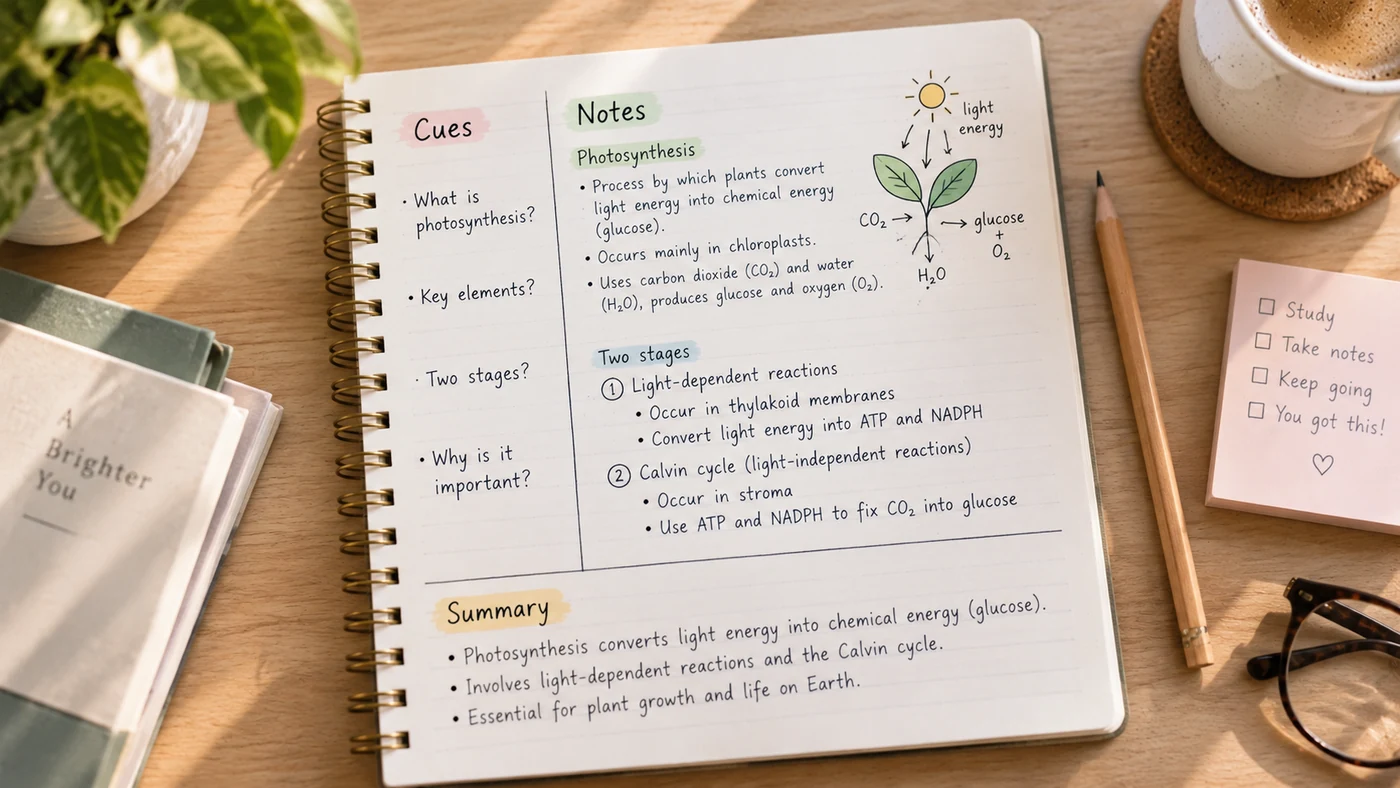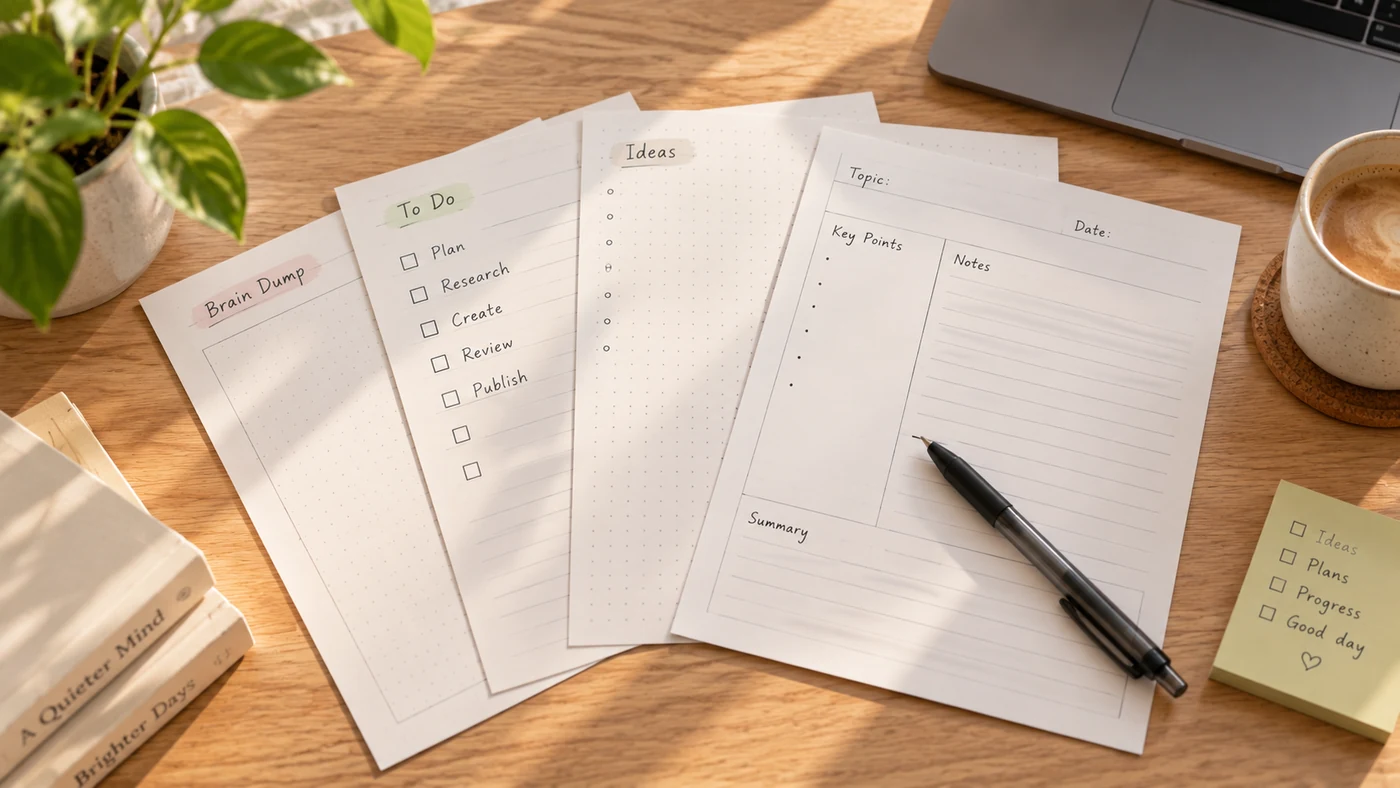
These free note-taking templates are simple page layouts you can copy into a document, write by hand, or print. Pick the layout that matches the job: capture a lecture, understand a reading, track a project, or remember today’s next step. A useful layout should make retrieval easier, not add decoration.
Choose the layout by the task
| Task | Start with | Why |
|---|---|---|
| Lecture or video | cue, notes, summary | leaves a place for review questions |
| Reading | claim, evidence, response | separates the author’s point from yours |
| Project | outcome, next action, owner | turns notes into follow-up |
| Daily capture | now, later, reference | prevents every thought becoming a task |
Copyable class notes layout
TOPIC:
DATE:

CUES OR QUESTIONS | MAIN NOTES
------------------|----------------------------
                  |
                  |

SUMMARY IN 2–3 SENTENCES:
The Cornell approach uses a cue area, a main notes area, and a summary area. Cornell’s Learning Strategies Center recommends recording in the main column, then creating questions and reviewing from the cues.[1]
Copyable reading notes layout
SOURCE:
PURPOSE FOR READING:

MAIN CLAIM:
EVIDENCE OR EXAMPLE:
MY QUESTION OR RESPONSE:
CONNECTION TO ANOTHER IDEA:
THREE-SENTENCE SUMMARY:
This is a good fit when you need to distinguish what a source says from what you still need to check. ANU notes that no single method is perfect and that a layout should support both capture and later retrieval.[2]
Copyable project notes layout
PROJECT:
OUTCOME FOR THIS SESSION:

DECISIONS:
-

NEXT ACTIONS:
- Action | Owner | Due date

OPEN QUESTIONS:
-
For a method behind these choices, see our note-taking methods guide. For daily capture rather than a project record, these everyday note-taking ideas can help you keep the page lighter.
Frequently Asked Questions
What is a good note-taking format?
A good format gives each kind of information a predictable home and leaves room for a short summary. Use a cue-and-notes layout for lectures, a claim-and-evidence layout for reading, and an action-based layout for projects. Change the layout if it makes review harder rather than easier.[2]
Conclusion
Copy the smallest layout that supports your next task. Consistent headings and a short summary are more useful than a complicated page you stop using after one day.
References
- Cornell University Learning Strategies Center. "The Cornell Note-taking System"
- Australian National University. "Note-taking template"