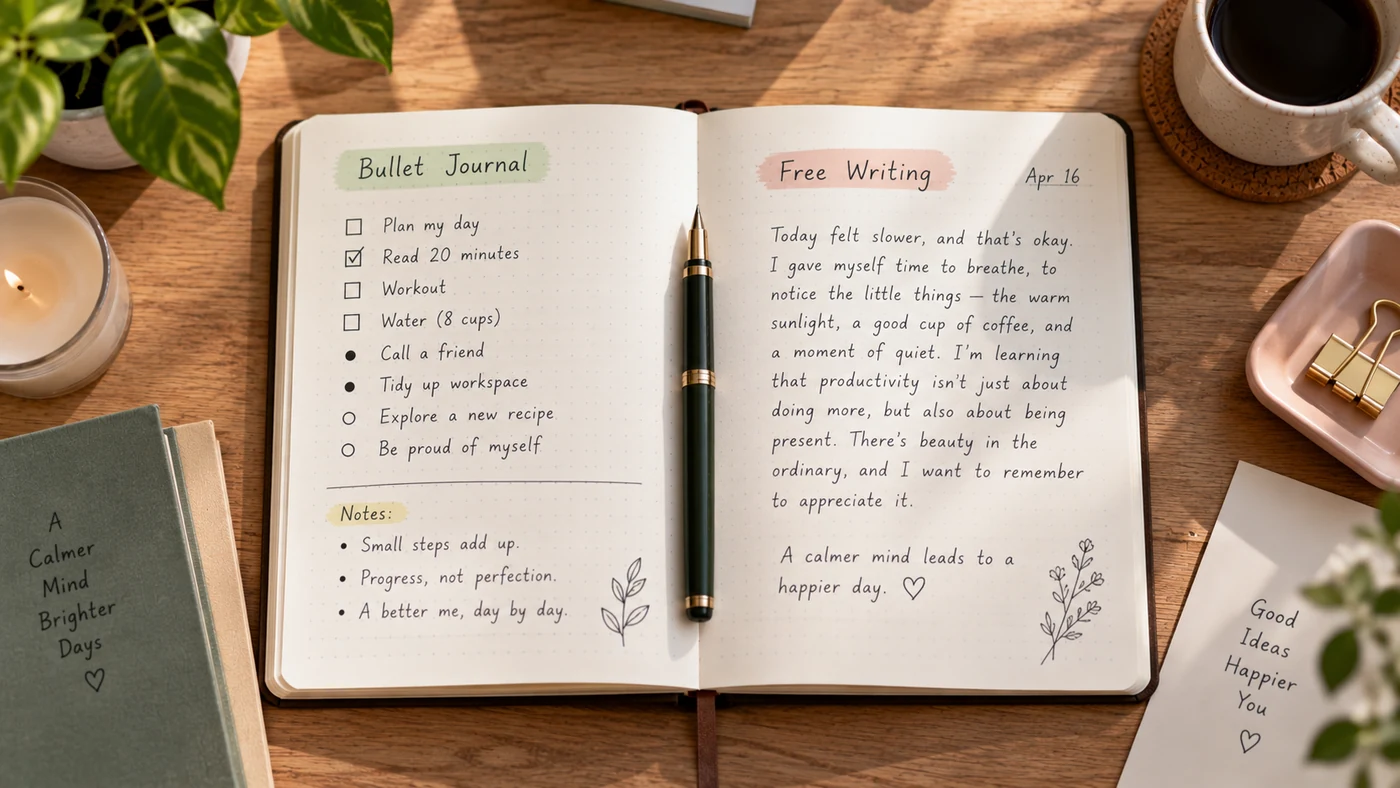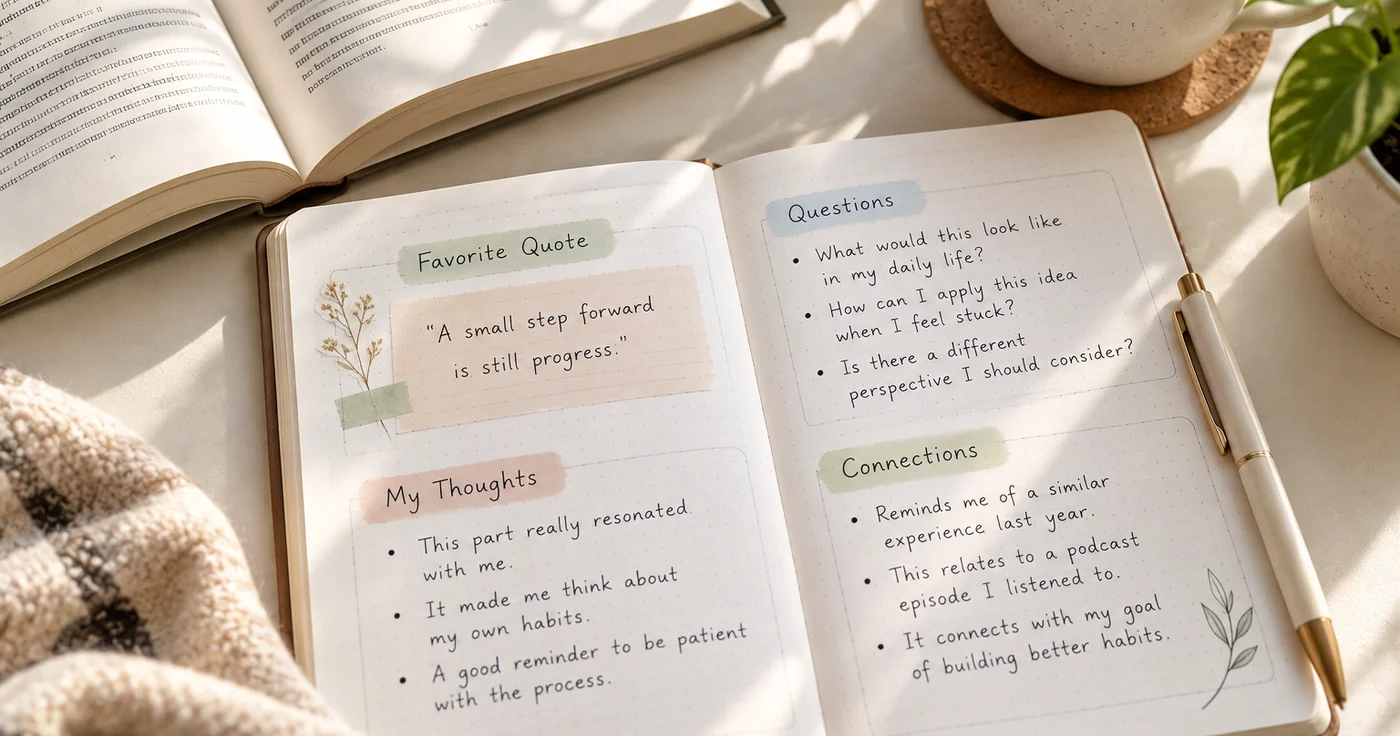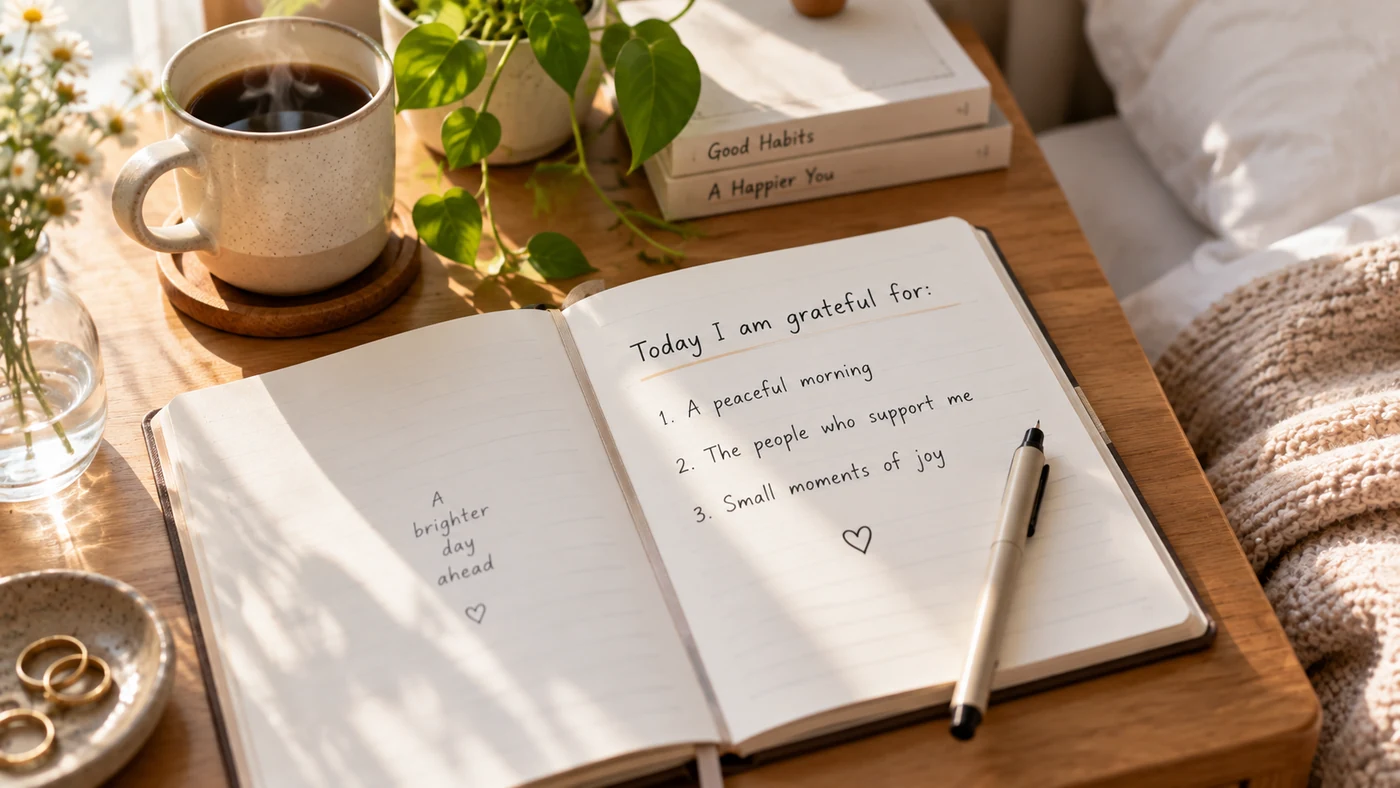
A daily gratitude journal does not need a perfect page or a long entry. It needs a repeatable moment to notice something specific. Choose a two-minute, five-minute, or evening routine based on the time you actually have, then use rotating prompts so the practice does not become a list of the same answers.
Choose a routine that fits the day you have
Start with the smallest version you can repeat:
| Routine | What to write | When it fits |
|---|---|---|
| Two minutes | Three specific things you appreciated | Busy mornings, breaks, or low-energy days |
| Five minutes | Three appreciations and one sentence about why one mattered | A regular start or end of day |
| Evening review | One person, one moment, and one thing you learned to appreciate | When you want to close the day deliberately |
You do not have to use the same routine every day. The useful pattern is returning to the page, not completing the longest entry.
Use a two-minute gratitude entry
Write three details from the last day or the day ahead. Keep them concrete:
- A person who made something easier
- A small comfort, place, or resource you noticed
- A chance, decision, or moment you would like to remember
Example: “My neighbor held the elevator when my hands were full.” Specific entries are easier to revisit than broad labels such as “family” or “my life.”
Use a five-minute entry when you want more context
Start with the same three items. Then choose one and finish this sentence: “This mattered because…”
Example:
I appreciated the quiet ten minutes before my first call. This mattered because I could make a plan before reacting to other people’s requests.
The extra sentence turns a list into a record of what supported you that day. If you are new to keeping a regular journal, How to Start a Journal can help you set a low-pressure starting routine.
Use an evening review to notice the whole day
An evening entry can follow a three-part structure:
- One person I appreciated
- One moment I appreciated
- One ordinary thing I noticed differently today
For example, the last answer might be a bus that arrived on time, a familiar meal, or a colleague’s clear explanation. The goal is not to force a positive interpretation of every day. It is to make room for a few details that would otherwise disappear.
Make the routine easier to resume
Attach the entry to something that already happens: after making coffee, before opening your work messages, or when you plug in your phone at night. Keep the default small: three lines are enough. If you miss a day, start again with the next entry instead of trying to reconstruct what you missed.
The routine should lower the effort of noticing a detail, not create another task to catch up on. If you want to choose a broader writing method before settling on gratitude, see Journaling Techniques.
Rotate prompts instead of repeating the same list
Use one question per day:
- What made today lighter?
- Who helped me, directly or indirectly?
- What did I enjoy before I rushed past it?
- What skill, object, or place supported me today?
- What did I learn to appreciate after it was difficult?
- What would I like to thank my past self for?
- What is one detail from today I want to remember next week?
If you want to pair gratitude with a record of how a day felt, Mood Journal Ideas offers a related direction. For memory-focused entries away from home, see Travel Journal Ideas.
Review once a week
At the end of a week, reread the entries without scoring them. Look for three things:
- A person, place, or activity that appeared more than once
- A small support you want to protect in the coming week
- An entry you would like to turn into a message, plan, or memory
This is a review of your record, not evidence that you should feel a certain way. The studies below examine defined groups and approaches, so they cannot predict how this routine will feel or work for every reader. [1][2]
Frequently Asked Questions
What is the most effective gratitude journal?
There is no single most effective format for everyone. Start with the smallest routine you can maintain: three specific items in two minutes, a five-minute entry with one reason, or an evening review. After one week, keep the version that helps you notice useful details without making the practice feel like a chore.
What is an example of daily gratitude?
“I appreciated that my teammate explained a confusing step without making me feel rushed. It mattered because I could finish the task with more confidence.” The entry names a specific event and explains why it stood out.
Conclusion
Choose a daily gratitude journal routine by the amount of attention you can give it consistently, not by the length of the entry. Test one real routine for a week, then keep the prompts and review habits that help you notice details worth returning to.
When a day is busy, three specific lines are enough. When you have more time, add context to one of them and let the journal become a record rather than a performance.
If you want to keep written entries, photos, voice notes, or handwriting together, EasyNotes can be a natural fit for a personal gratitude practice. Use a note-level reminder to return to the habit, and use categories or tags to keep the record organized over time.