Journaling techniques work best when they match the reason you want to write. You might need a place to untangle a thought, remember a trip, track a project, or notice how a day felt. Start with that goal, choose the smallest useful format, and adjust after a week instead of looking for one perfect method.
Choose a technique by what you want from the page
Use this selector before deciding how much to write:
| Your goal | A technique to try | Smallest useful start |
|---|---|---|
| Clear your head | Freewriting | Write continuously for five minutes without editing |
| Understand an event | Reflective journaling | Record what happened, what stood out, and what you might do next |
| Begin or end the day deliberately | Morning or evening journaling | Answer one consistent question at the same time each day |
| Notice what you value | Gratitude journaling | Name three specific moments, people, or details |
| Keep plans and records together | Bullet journaling | Add a short task list and one reflection line |
| Observe patterns in your days | Mood observation | Note a feeling, its context, and what you need next |
| Preserve a place or experience | Memory or travel journaling | Capture one scene, detail, or conversation before it fades |
The table is a starting point, not a test you have to pass. If the format makes you avoid writing, make it smaller.
Freewrite when you need to get unstuck
Freewriting is useful when you have too many thoughts to organize. Set a short timer and keep the pen or cursor moving. Do not correct grammar or decide whether the writing is important while you are doing it.
Try this opening: “The thought I keep returning to is…” Then write until the timer ends. When you finish, underline one sentence worth keeping, acting on, or exploring later.
Use reflection to learn from a real moment
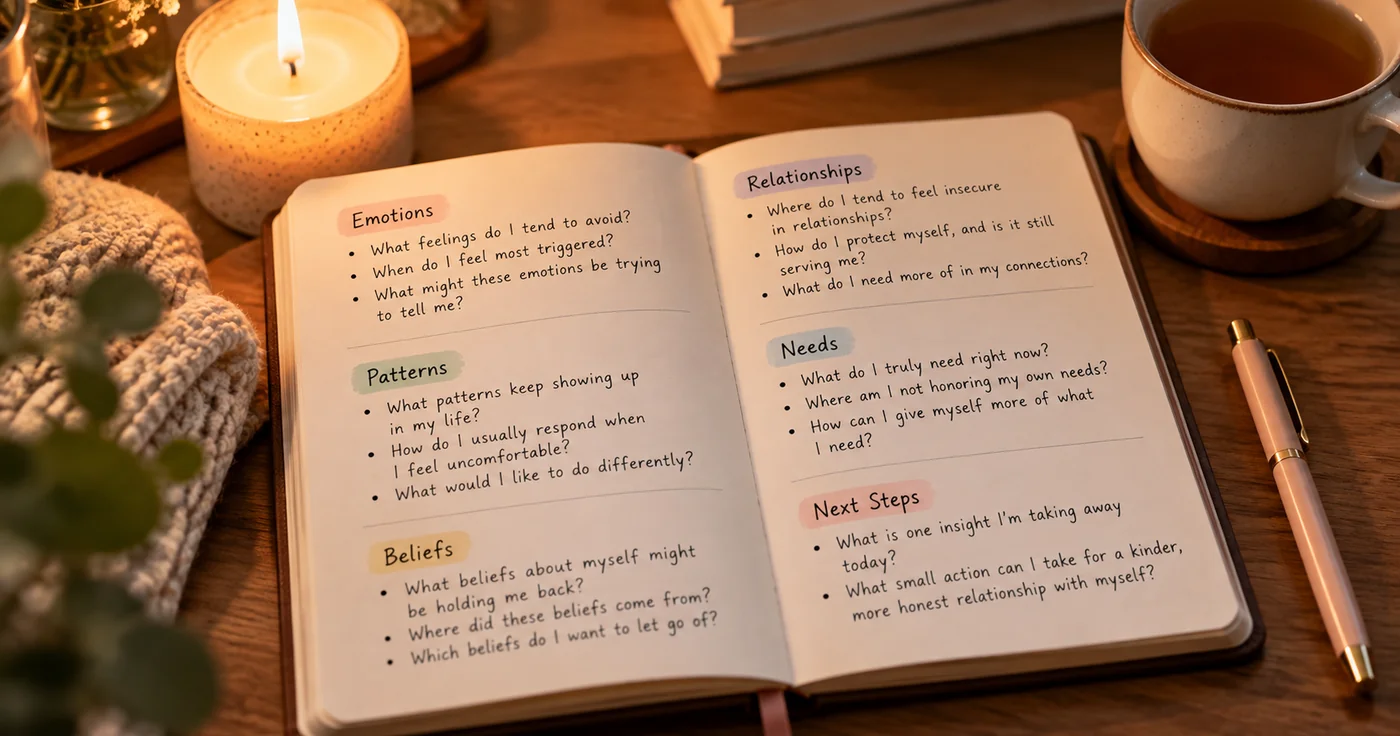
Reflective journaling gives an event a clear shape. It is especially useful after a difficult conversation, a completed project, or an unexpected change.
Write three short parts:
- What happened
- What I noticed or felt
- What I want to remember, ask, or try next
For a broader beginner routine, see How to Start a Journal. Keep the entry close to the event so you are working with details rather than a vague memory.
Make morning and evening journaling practical
Morning journaling is for orientation. Evening journaling is for review. You do not need both.
For a morning entry, write one priority, one concern you can address, and one thing that would make the day feel worthwhile. For an evening entry, write one moment you want to keep, one task or thought to carry forward, and one thing to leave on the page.
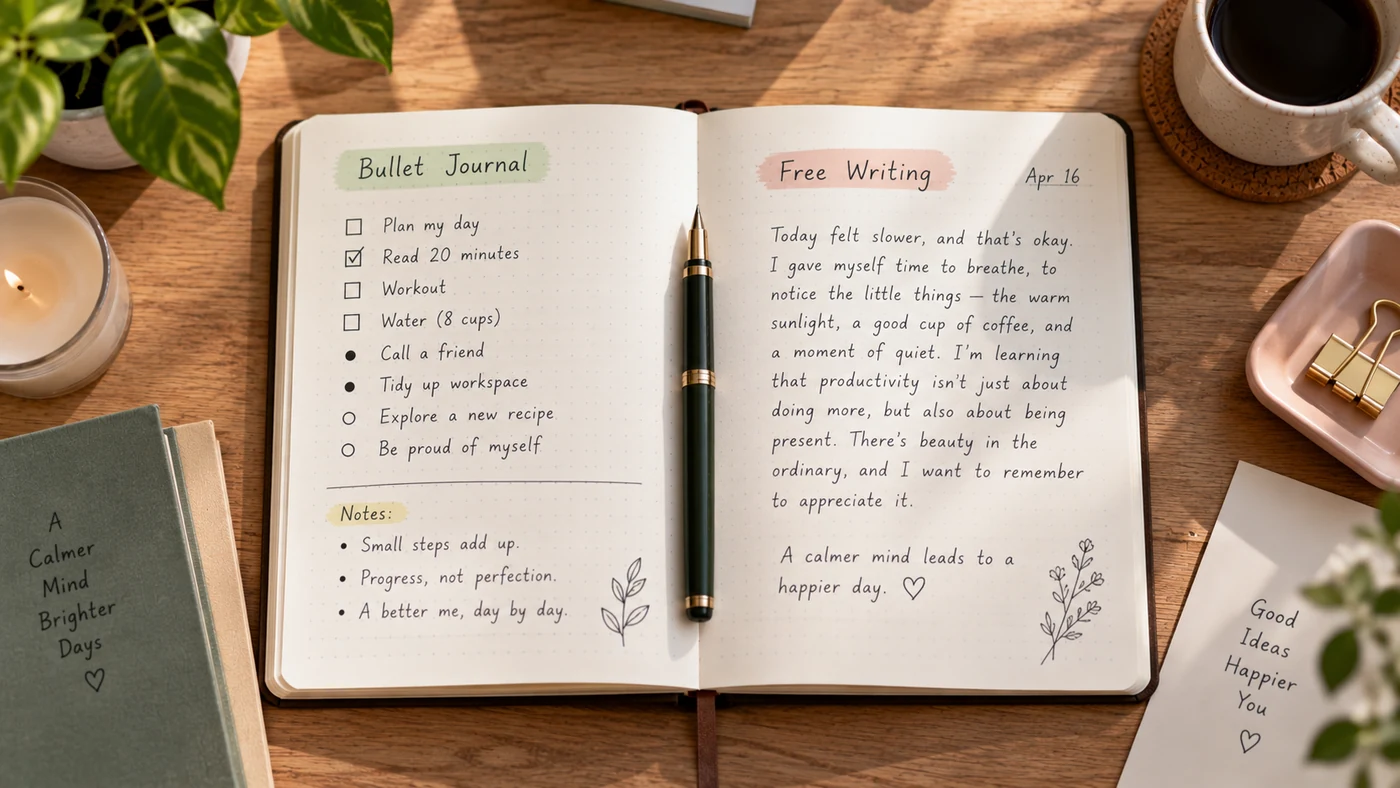
The Bullet Journal method is one way to combine records, tasks, and reflection. [1] Its companion ritual checklist offers examples of daily, weekly, and monthly review rhythms. [2] Use those rhythms as ideas, not obligations.
Try gratitude journaling when specificity helps
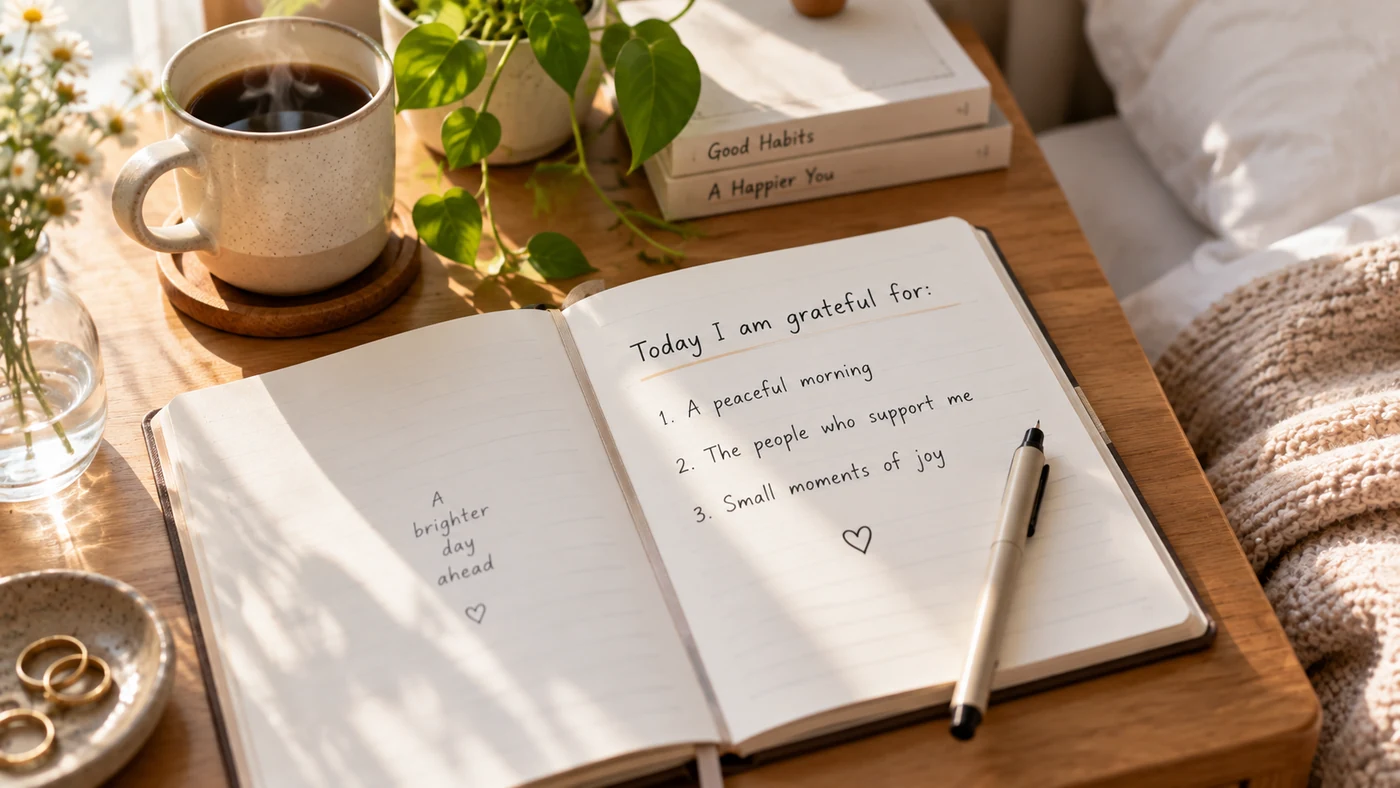
Gratitude journaling is more useful when entries are concrete. “I am grateful for coffee” is a start. “I am grateful that a friend sent a message when I needed a pause” preserves the detail that made the moment matter.
Write three items, then add one sentence to one of them:
- What happened?
- Why did it matter today?
- What part did another person, place, or choice play?
If you want a daily structure rather than a general technique, read Daily Gratitude Journal for routines, prompts, and a weekly review. Mood Journal Ideas offers a related path for observing how a day felt.
Use themed journaling for a recurring part of life
Choose a themed journal when you want to build a record around one continuing subject rather than summarize every day. A reading journal can hold quotations and reactions. A project journal can capture decisions, questions, and next steps. A travel journal can preserve scenes and conversations while they are still fresh.
Give the theme a small repeatable structure: date, one detail worth keeping, and one thought or action to revisit. The theme should focus your attention, not make every entry sound the same.
Use mood observation without trying to diagnose yourself
Mood observation is a record of context, not a clinical assessment. Give the entry a date, name the feeling in ordinary language, and write what was happening around it. You can also note what helped, what made the moment harder, or what you need next.
For example: “Tuesday afternoon: distracted after back-to-back calls. A ten-minute walk helped me return to the report.” Over time, this creates a personal record without claiming to explain or treat a health condition.
Keep memory and travel entries sensory
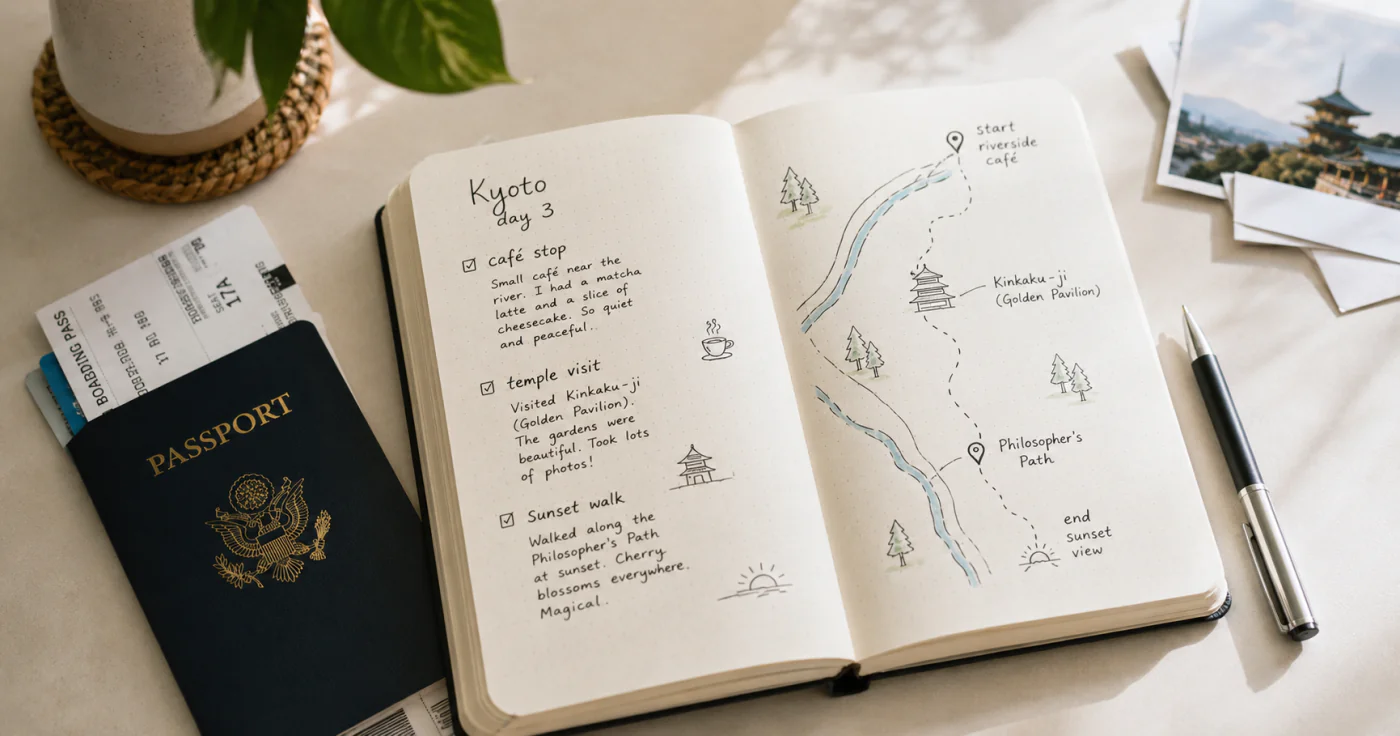
Memory journaling works when you collect details before they become generic. Describe one sound, sight, phrase, or small surprise. A travel entry can start with the first thing you noticed upon arriving, rather than an attempt to summarize the entire day.
For a travel-specific angle, see Travel Journal Ideas. One vivid paragraph is often more useful than a long chronological record.
Build a technique you will repeat
Use the method for seven days before judging it. Keep the same time, place, or opening question where possible. At the end of the week, ask whether the format gave you clarity, a useful record, or a reason to return. Keep what helped and remove the rest.
Frequently Asked Questions
What is the best journaling method?
There is no single best method. Choose freewriting for mental clutter, reflection for learning from an event, a short morning or evening entry for routine, and a record-based method when you need to track plans or memories. The best choice is the one that fits your purpose and is small enough to repeat.
What are the 7 different types of journaling?
There is no single official list of seven types. This guide uses seven practical options: freewriting, reflective journaling, morning journaling, evening journaling, gratitude journaling, mood observation, and memory or travel journaling. They can overlap. For example, an evening entry can include gratitude and a brief reflection on the day.
Conclusion
Choose a journaling technique by the kind of record you need, not by how impressive the page looks. Test one small method with a real week of thoughts, tasks, or memories, then keep only the parts that make returning to the page easier.
If your goal changes, your method can change with it. A five-minute freewrite, a short evening review, or one concrete travel detail can all be enough to make journaling useful.
If you want to keep text, images, voice notes, or handwriting in one personal record, EasyNotes can be a natural fit. Categories, tags, and full-text search can help you return to an entry by topic or phrase without treating the journal as a shared editing workspace.