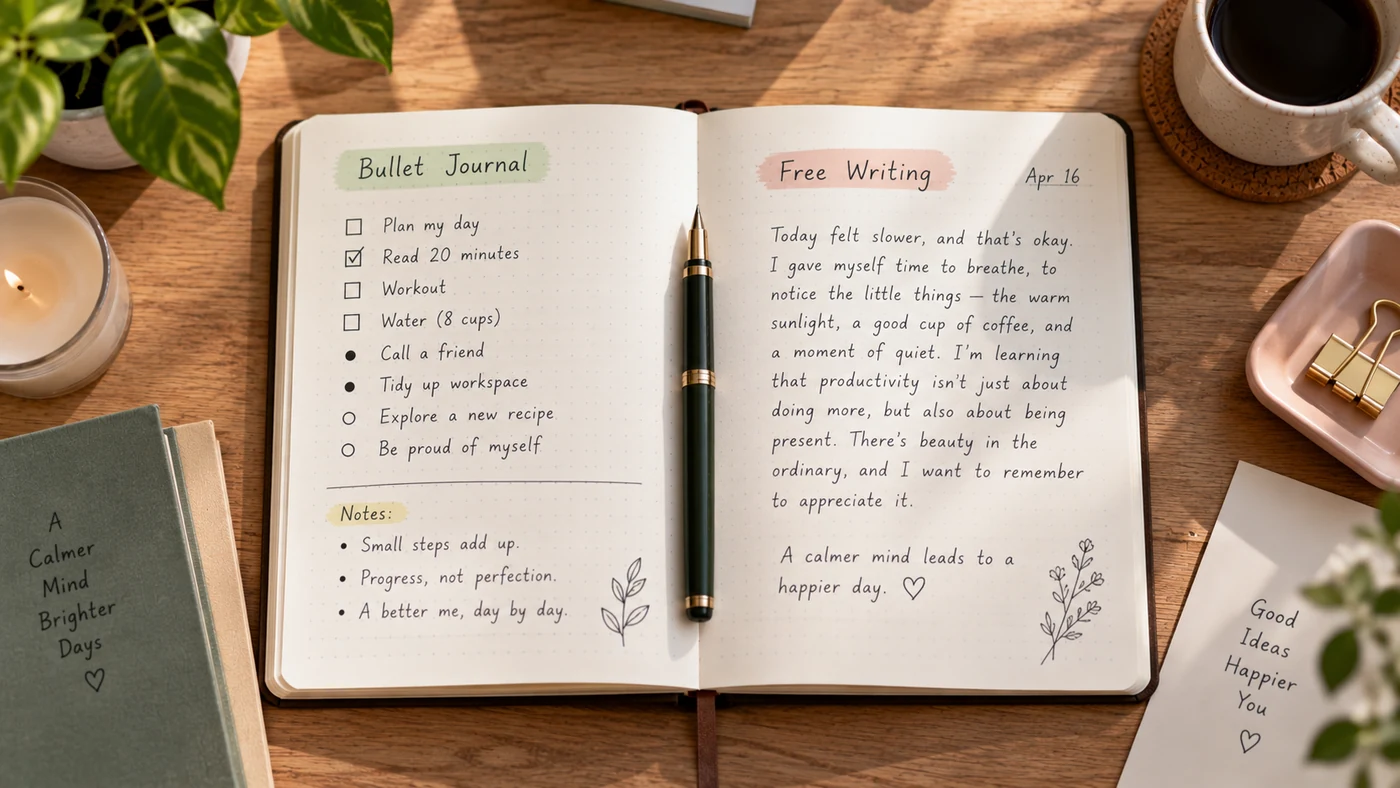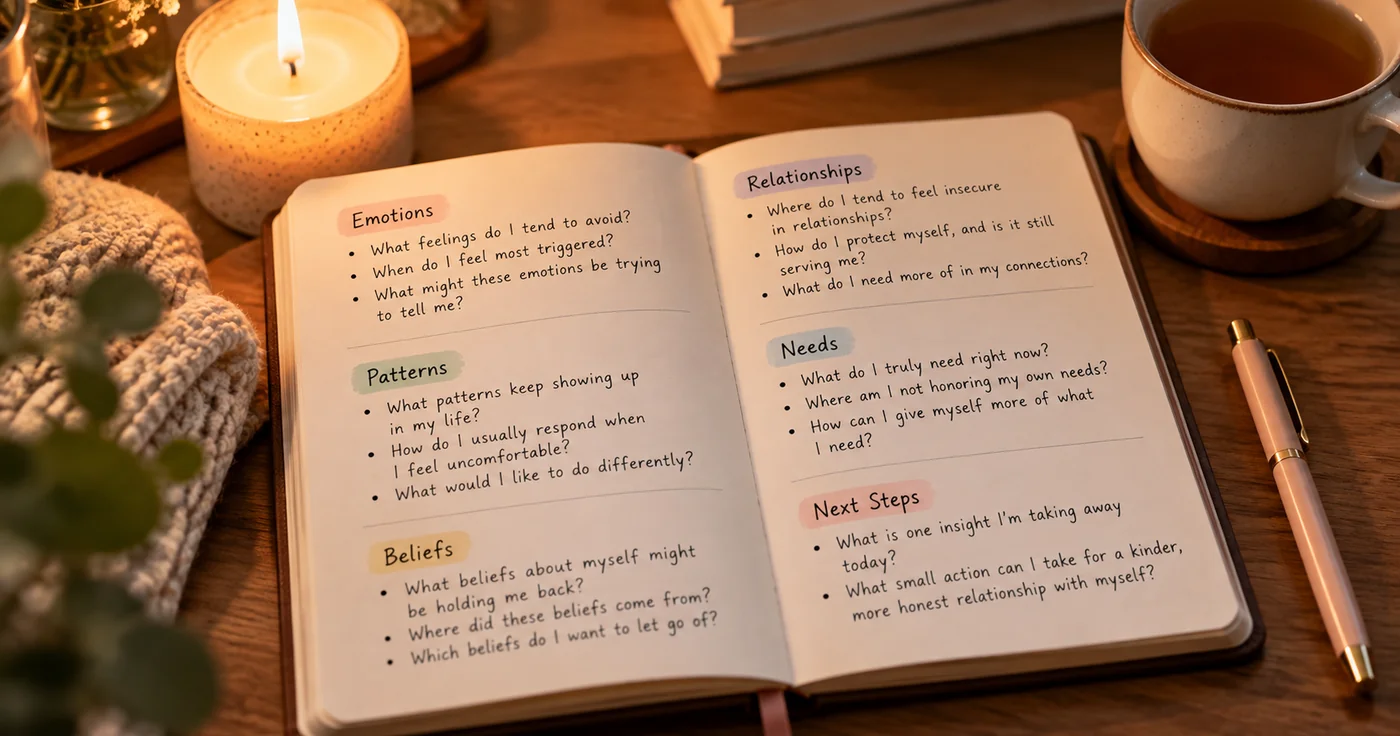
These shadow work journal prompts offer a gentle starting point for noticing reactions, needs, and beliefs you may usually set aside. Choose one question that feels manageable, write for a few minutes, and skip anything you do not want to explore. This is a personal reflection exercise, not therapy or a test you need to pass.
How to use these prompts gently
You do not need to answer every question or uncover a dramatic insight. Pick one prompt, respond in a few honest sentences, and leave room for “I’m not sure yet.” You can also write about an ordinary recent moment instead of searching for a painful memory.
If a question feels uncomfortable in a way you do not want, close the page or choose a lighter prompt. You are in charge of what you explore and when you stop.
For a broader overview of journaling approaches, see Journaling Techniques. If you are looking for a first step into keeping a journal, How to Start a Journal covers that separate task.
Prompts for noticing your reactions
Use these questions to look at a recent, everyday moment without judging yourself for having a reaction.
- What small moment stayed on my mind longer than I expected?
- What did I feel just before I reacted?
- What did I wish the other person had understood?
- What part of the situation was within my control, and what was not?
- If I described the moment without blaming myself or anyone else, what would I say?
- What would I want to remember if a similar situation happens again?
Prompts for traits you judge in yourself or others
These questions invite curiosity, not a verdict. A trait can be complicated; noticing it does not mean you must act on it.
- What quality in someone else has been irritating me lately?
- Is there a small, healthy version of that quality I would like to allow in myself?
- What do I criticize myself for wanting?
- Which part of my personality do I show only around people I trust?
- What assumption do I make about people who express their needs directly?
- What is one strength I sometimes hide because I worry about how it will be received?
Prompts for needs and boundaries
Reflect on what helps you feel respected and what you may want to communicate more clearly.
- When did I agree to something recently while wishing I could say no?
- What would a kind, clear boundary sound like in that situation?
- What do I need more of this week: quiet, help, time, clarity, or something else?
- What request have I been hesitant to make?
- Where could I give myself permission to change my mind?
- What is one small way I can respect my own limit today?
Prompts for beliefs and self-image
Keep these questions grounded in the present. You can answer with a specific example rather than trying to explain your whole life.
- What do I believe I must do to be considered successful?
- Which expectation did I choose for myself, and which one did I inherit from others?
- What kind thing do I find difficult to believe about myself?
- What mistake do I treat as proof of a permanent flaw?
- What would I say to a friend who made the same mistake?
- What is one view of myself that I am willing to hold more lightly?
Prompts for self-acceptance and integration
Reflection can end with a practical next step. You do not need to resolve everything in one sitting.
- What feeling can I acknowledge without needing to fix it right now?
- What would it look like to respond to myself with patience in this situation?
- What part of my answer feels useful, even if it is incomplete?
- What small action would align with what I noticed?
- What can I leave unanswered for now?
- What would help me feel settled before I return to the rest of my day?
A simple reflection format
If a blank page feels too open-ended, use this short structure:
| Step | Write about |
|---|---|
| Moment | What happened, in a few neutral sentences? |
| Reaction | What did I feel, think, or want to do? |
| Need | What might I have needed in that moment? |
| Next step | Is there one small response I want to try—or do I simply want to leave this here? |
You can stop after any row. The format is a writing aid, not a requirement to interpret every feeling.
Conclusion
Choose one prompt that feels manageable, answer it in your own words, and stop when you have said enough for today. Gentle reflection can be brief; you do not need to force a breakthrough or finish the list.
If you want more ways to structure a regular journaling practice, explore Journaling Techniques. For the basics of beginning a journal, use How to Start a Journal.