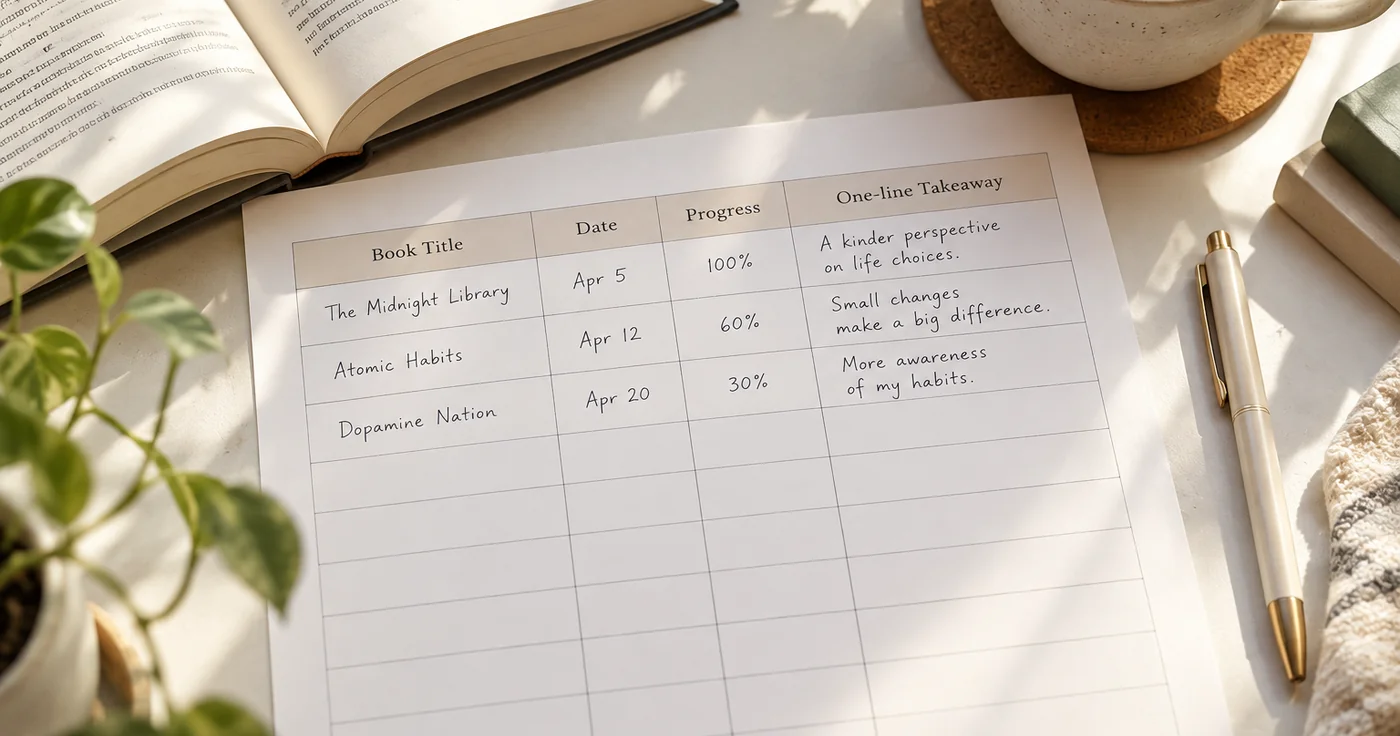
Use this reading log template to record the books you start, how far you get, when you finish, and one thought worth keeping. Copy the table into a document or notes app and add one row per book. If you need to track each reading session, use the smaller daily log below. This page records reading activity; it is not a to-read list or a set of detailed book notes.
Copyable digital reading log template
Use one row per book. Update the progress field while you are reading, then add the finish date and a brief reflection when you complete it.
| Book title and author | Start date | Finish date | Progress | One-line reflection |
|---|---|---|---|---|
| The Example Book, A. Writer | October 2 | October 12 | Finished | The last chapter changed how I saw the main character. |
| [Title and author] | [Date] | [Date or blank] | [Page, chapter, or status] | [One sentence] |
The filled row is fictional and shows the level of detail needed. For a simpler version, remove the author, start date, or progress field. Keep only the fields you will update.
Optional daily reading log
Use this version if you want to record individual sessions rather than only completed books. It is a separate view of the same reading activity, not a second list of books to finish.
| Date | Book | Pages or chapter reached | Minutes (optional) | One-line note |
|---|---|---|---|---|
If you want a paper copy, paste either table into a document, widen the writing columns, and check the print preview before printing.
How to keep a reading log
Add a book when you begin
Enter the title and start date when you begin reading. If you are already partway through a book, add it when you create the log and use the current page, chapter, or another progress marker as your starting point.
Update progress with a clear marker
Choose one progress style and use it consistently: a page number, chapter, or a simple status such as “in progress,” “paused,” or “finished.” A short marker makes it easy to see where you left off without turning the log into a chapter-by-chapter summary.
Add a one-line reflection when you finish
Write one sentence about what stood out, what you learned, or what you want to remember. Keep it personal and brief. If you want to capture quotations, themes, detailed ideas, and page references, use a separate book-notes system such as How to Create Book Notes.
Review the log when choosing what to read next
The log records books you started and finished. A separate reading and movie list can hold titles you may want to read later, so your queue and reading history stay easy to tell apart.
Keep the log small enough to maintain
You do not need to fill every field for every book. A title, a progress marker, and a brief reflection may be enough; add dates when they help you remember when you started or finished. If a book is unfinished, leave the finish date blank and mark its current status rather than treating it as completed.
Conclusion
A useful reading log captures the small record you want to keep: which book you read, when, how far you got, and one thought worth saving. Use the per-book table for reading history and the daily table only if session-by-session progress matters to you.
Copy the table that fits your routine and add your current book. When you finish, fill in the date and reflection before starting the next entry.