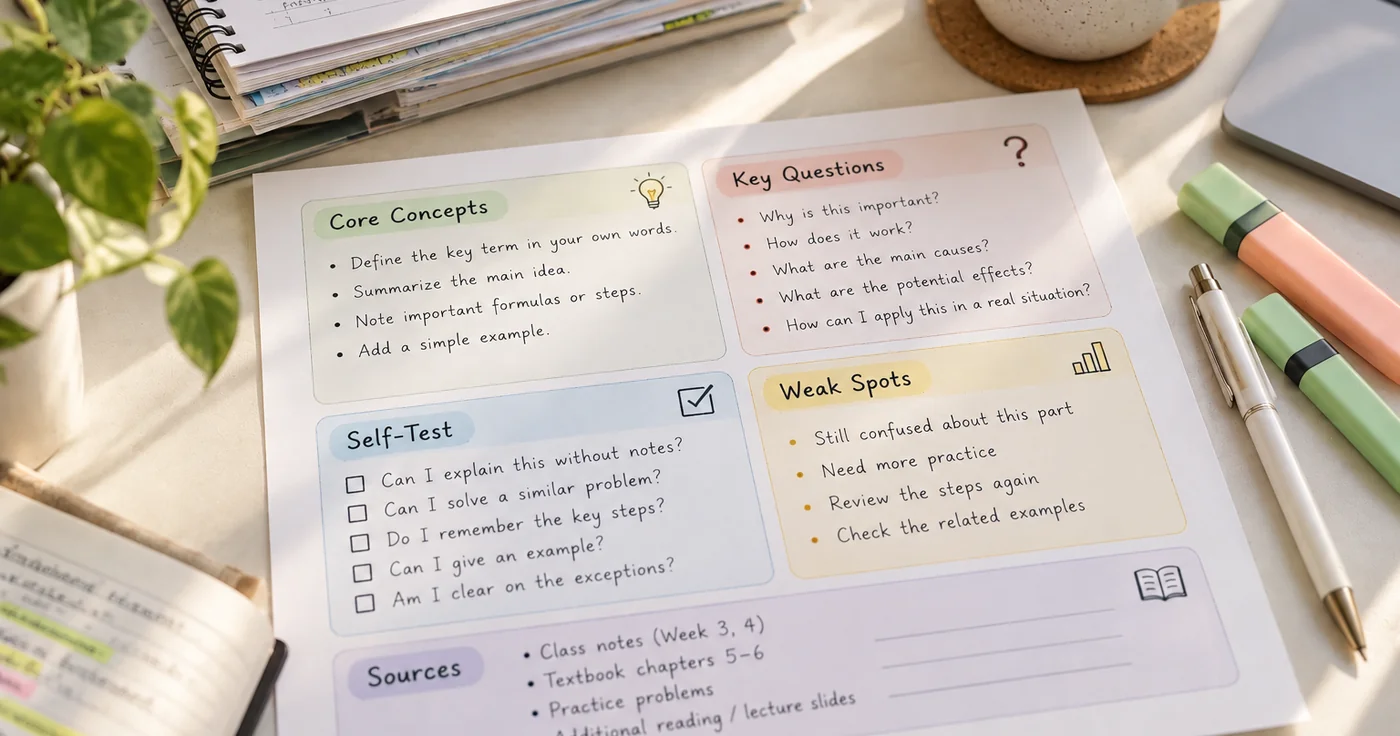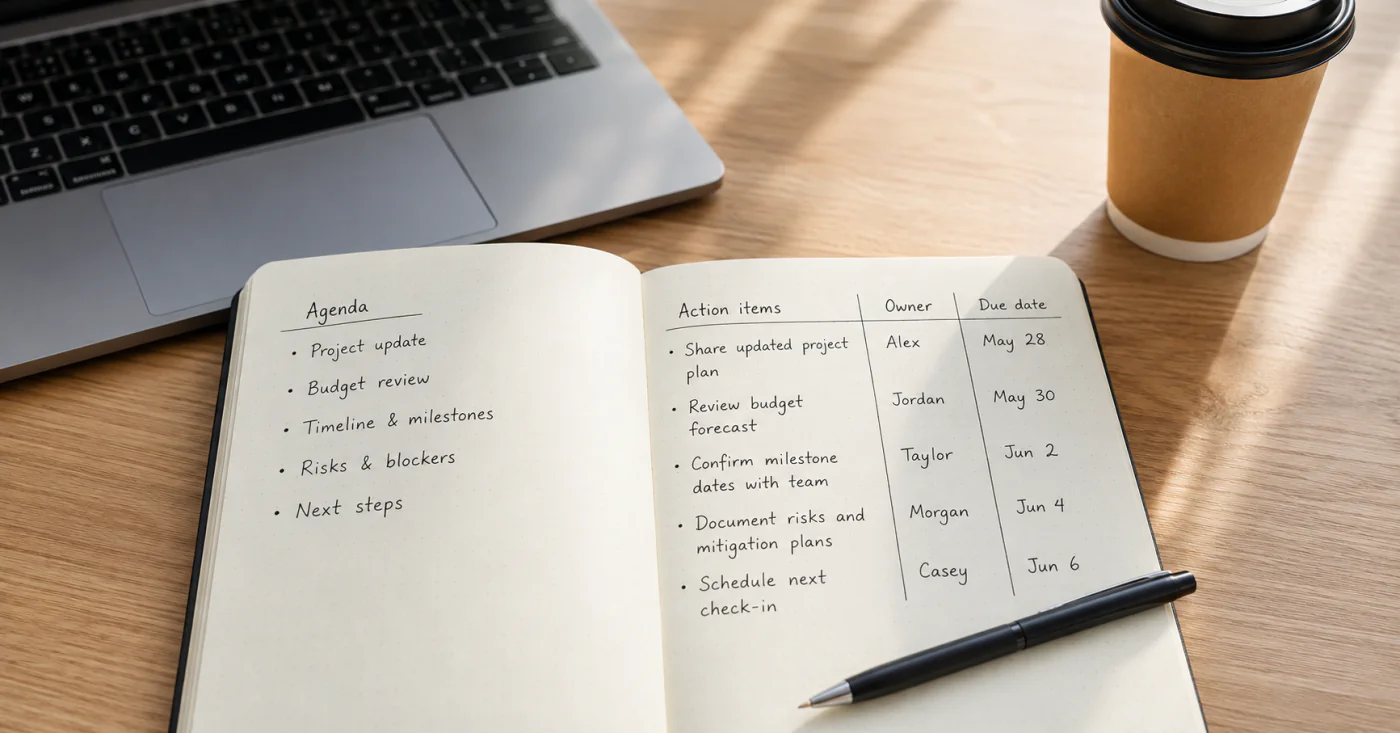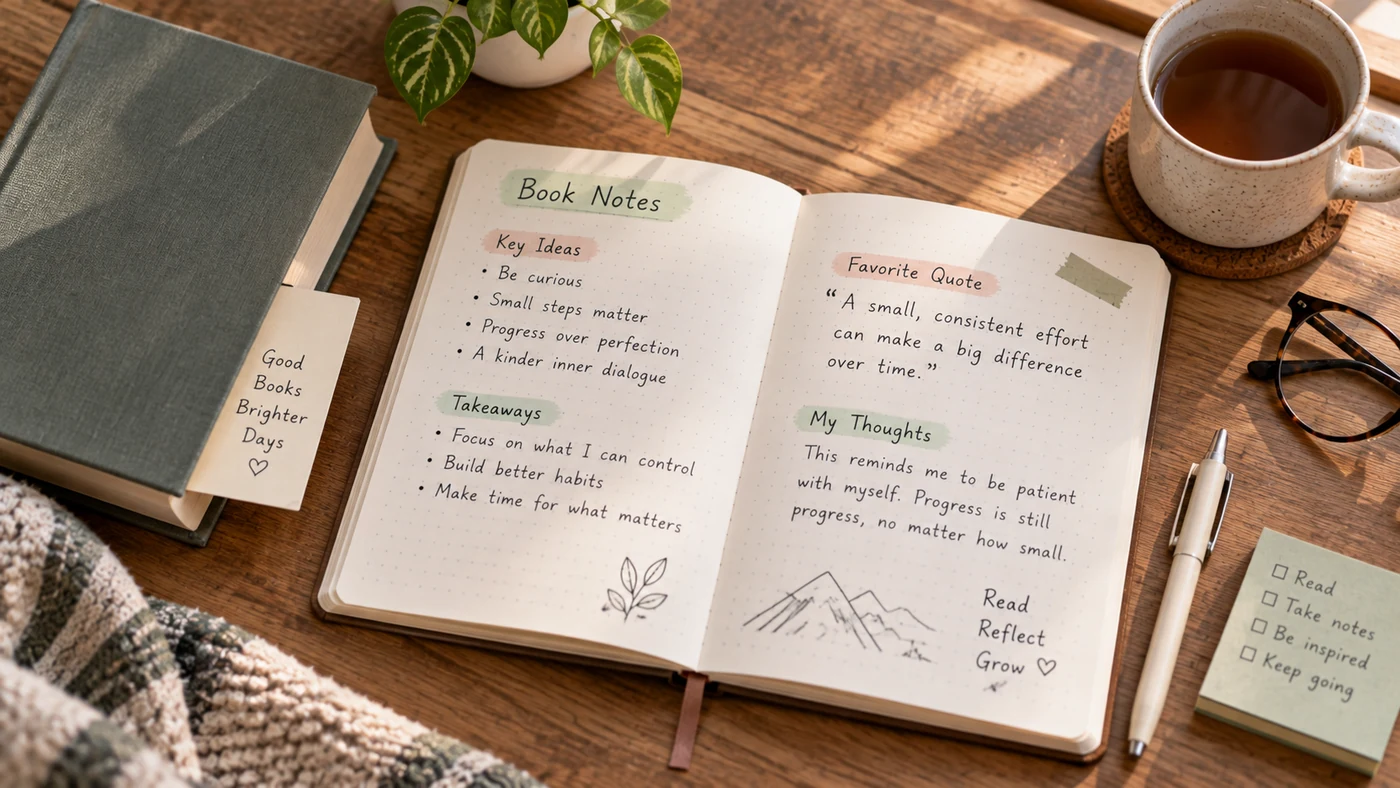
Good book notes do more than preserve a few favorite quotes. They help you find an idea again, remember why it mattered, and connect it to your own work or life. Start with a clear reason for reading, record the book’s basic details, and separate the author’s words from your response. Then organize notes by theme rather than by page order alone. This approach works for nonfiction, novels, and professional reading without turning every book into a transcription project.
Start With a Reading Purpose
Before you begin, write one sentence about what you want from the book. You may be reading to learn a skill, understand an argument, enjoy a story, or collect ideas for a project. That sentence gives you a filter: a passage belongs in your notes when it helps answer your question, changes your view, or gives you language worth revisiting.
You do not need to predict every useful idea. The purpose simply keeps your notes selective.
Create a Simple Book Record
At the top of a new note, capture the information that will help you identify the source later:
- Title and author
- Edition, format, or publication year when relevant
- Date finished
- Your reading purpose
- A one- or two-sentence first impression
Keeping source details with your notes matters when you return to a quotation, recommendation, or claim later. The Open University also recommends making it clear which material comes from a source and which is your own thinking. [1]
Capture Quotes With Enough Context
When a sentence is worth saving, record the exact wording in quotation marks and add its page or location. Then add a short line explaining why you saved it.
For example:
“A saved quote goes here.” — p. 42 Why it matters: It gives a concise way to explain the chapter’s central tradeoff.
That second line is what makes the quote usable later. Without it, a list of highlights can become hard to interpret after a few weeks.
Write Your Own Response Beside the Source
The most valuable part of book notes is often your response: an explanation in your own words, a question, a disagreement, or a connection to another idea. Do this after you have understood the passage rather than rewriting it sentence by sentence.
A practical method is to look away from the page, state the idea from memory, and then check whether your version still reflects the author’s meaning. That helps distinguish paraphrase from copying and makes gaps in understanding easier to spot. [2]
Use a simple label system if it helps:
Quotefor exact wordingIdeafor the author’s point in your wordsResponsefor your reaction or applicationQuestionfor something to revisit
Organize Notes by Theme, Not Just Chapter
Chapter order is useful while reading, but themes are usually more useful afterward. Add a few repeated topic labels such as leadership, character, decision-making, or research methods. You can also keep a short index at the top of the note that links a theme to relevant pages or sections.
For a fiction book, themes might include character change, setting, conflict, and images worth revisiting. For nonfiction, they might include frameworks, evidence, objections, and actions to test.
If you want a broader system for sorting ideas, note-taking methods can help you choose a structure that matches the way you read and review.
Finish With a One-Page Synthesis
When you finish the book, do not stop at the last highlight. Write a short closing note that answers:
- What is the book’s central idea or story?
- Which three points do I want to remember?
- What do I agree or disagree with?
- What will I do, read, or think about next?
This is the part that turns scattered excerpts into book notes. It also makes future review much faster: you can read the synthesis first, then return to selected quotations only when you need more detail.
Revisit Notes on a Light Schedule
Review your synthesis a few days after finishing the book, then again when the topic becomes relevant. Add one line about what still feels useful and what no longer does. A lightweight daily-note habit can make that easier; see How to Take Notes Every Day for a practical routine.
For books you want to recommend or revisit, keep a separate reading list with the title, status, and a link to your full notes. Reading and Movie List Ideas offers ways to make that list more useful.
Frequently Asked Questions
How do you make notes for a book?
Start with a reading purpose, record the book details, save only the most useful quotes with page numbers, and write your own explanation beside each one. Finish with a short summary of the book’s main idea, your response, and any next action. The goal is a record you can understand without rereading the entire book.
Is there an app for book notes?
Many note-taking apps can work for book notes. Choose one that lets you keep a source record, organize notes by topic, find text later, and protect or share notes in a way that suits your needs. The right choice depends on whether you read mostly on paper, on an e-reader, or across several devices; Best Note-Taking Apps can help frame those selection criteria.
Conclusion
Choose a book-note system based on retrieval: you should be able to find the source, understand your own reaction, and locate a theme months later. Test the structure with one book you are already reading, then adjust the labels and summary questions before building a larger archive.
If you want a place to keep text, images, voice notes, or handwriting together, EasyNotes can be a natural fit for organizing reviewed book notes with categories, tags, and full-text search. Use it to preserve your own reading record—not as a substitute for checking quotations against the original book.