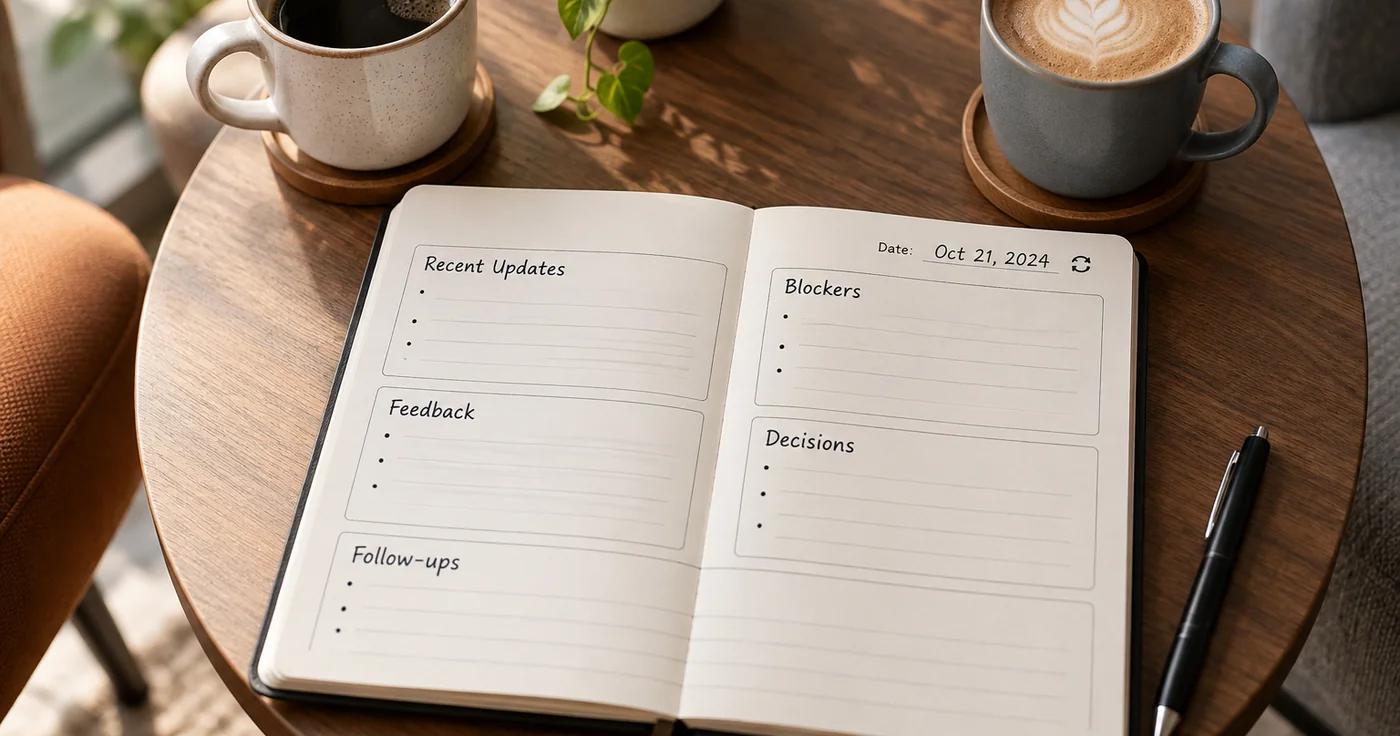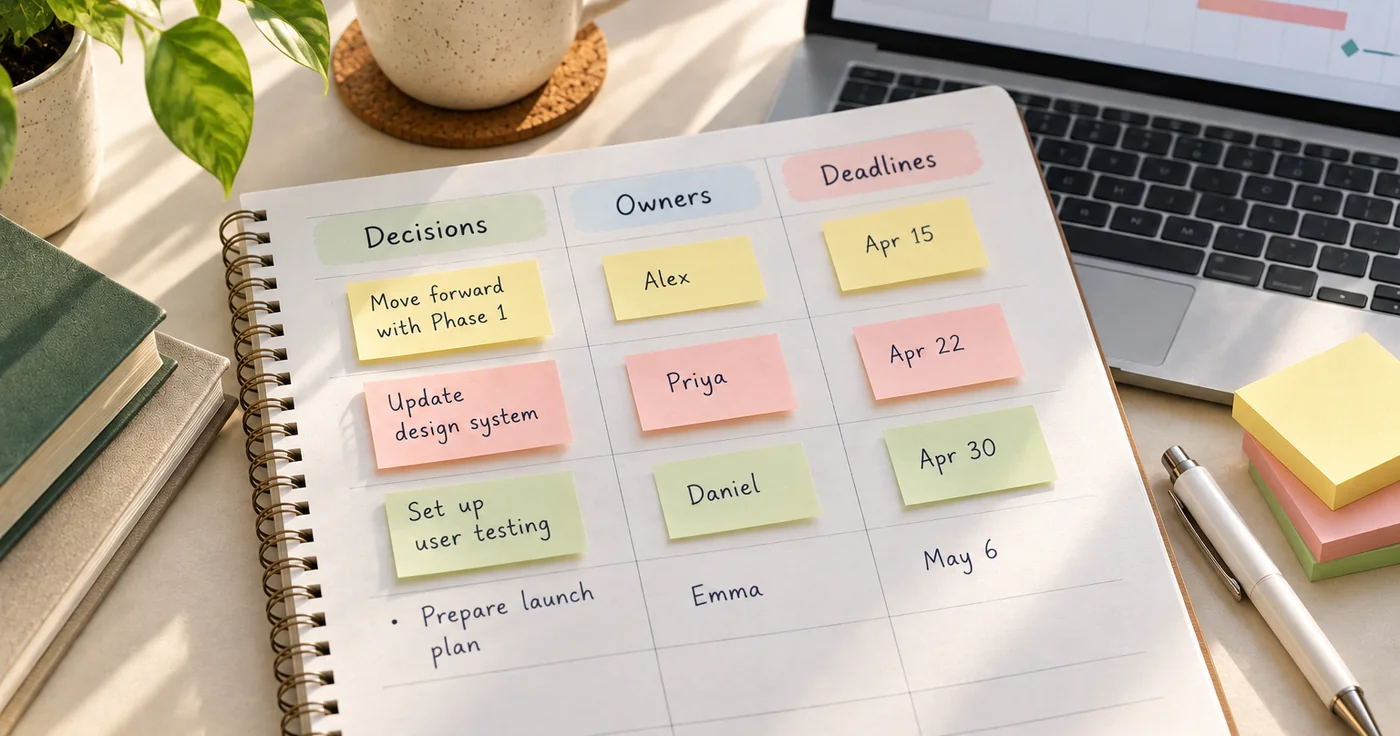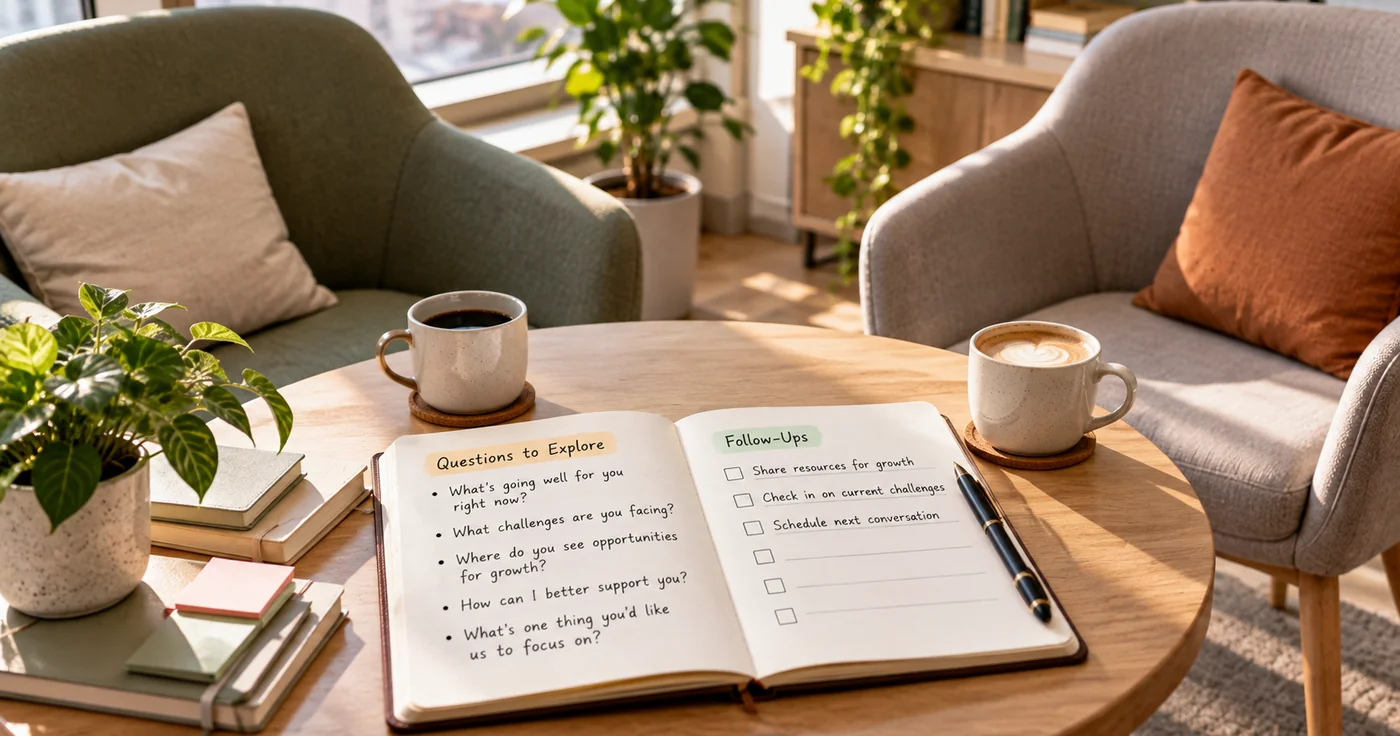
A skip-level meeting template helps an employee and a leader above their direct manager prepare for a useful conversation, capture themes, and agree on follow-up. Use it to make the purpose clear, give the employee room to speak, and avoid treating the meeting as a surprise performance review.
Copyable Skip-Level Meeting Template
SKIP-LEVEL MEETING
Date:
Employee:
Leader:
Team or work area:
Purpose for this conversation:
Topics the employee wants to raise:

1. Opening and expectations
- What would make this conversation useful?
- What can be discussed here, and what may need to be shared or escalated?

2. Work and team context
- What is helping the team do good work?
- Where do priorities, processes, or handoffs feel unclear?
- What is one recurring obstacle worth understanding?

3. Employee questions and ideas
- Question or idea:
- Context the leader needs:
- Response, decision, or information still needed:

4. Commitments and follow-up
- Next action:
- One owner:
- Check-back date:
- Who needs an update?

5. Carry forward
- Topic:
- Why it remains open:
- Next person or source to consult:
Adapt the prompts to the meeting’s purpose. Keep the notes focused on work themes and agreed actions; do not record sensitive personal details that are not needed for follow-through.
How to Use the Template
Before the conversation
Send a short note explaining why the meeting is happening and invite the employee to suggest topics. Tell the direct manager about the meeting when that fits the organization’s process; do not frame the conversation as a hidden investigation. Agree on note-taking expectations at the start, especially what may be shared afterward.
An ordinary one-on-one with a direct manager often centers on current priorities, feedback, and support between those two people. A skip-level conversation can use similar listening skills, but its template should leave more room for broader team patterns, unclear decisions, and questions an employee may not raise in a routine check-in. For a general meeting-note structure, see this meeting-notes guide; this page focuses on cross-level dialogue and follow-through.
During the meeting
Start by stating the purpose and asking what the employee wants from the conversation. Listen for examples and context before proposing solutions. If a concern involves another person or a sensitive issue, avoid promising secrecy; explain what you can keep limited and what may need to be shared to address it.
Separate observations from decisions. A recurring delay may point to a process problem, but the note should distinguish the employee’s example from what the leader has confirmed. If more information is needed, write down who will check and when rather than recording an unverified conclusion.
Close the loop
End by reading back the actions, owners, and dates. Tell the employee who will receive any follow-up and what will be shared. If the leader cannot resolve an issue in the meeting, name the next step and return date instead of implying that the concern has been settled.
For broader work-note organization, see work notes. Keep the record concise enough that both people can find the commitments later.
Filled Example
SKIP-LEVEL MEETING
Date: October 15
Employee: Alex
Leader: Casey
Team or work area: Customer education
Purpose: Understand recurring delays in publishing approved help content

1. Opening and expectations
- Useful outcome: Identify where approvals are getting stuck.
- Sharing expectation: Casey will summarize the process issue with the relevant team lead, without attributing comments unless Alex agrees or a specific follow-up requires it.

2. Work and team context
- Helping the team: Writers and reviewers use the same draft folder.
- Unclear handoff: Final approval owner changes by topic.
- Recurring obstacle: Writers sometimes wait several days without knowing who has the draft.

3. Employee questions and ideas
- Idea: Add a named final reviewer to each content brief.
- Context: Two recent drafts were returned after the planned review date.
- Response: Casey will check the current approval path before recommending a change.

4. Commitments and follow-up
- Next action: Map the current approval handoff for one recent draft.
- One owner: Casey
- Check-back date: October 22
- Who needs an update: Alex and the content team lead

5. Carry forward
- Topic: Whether the reviewer list should be maintained in the content brief.
- Why it remains open: The current process has not been confirmed.
- Next source: Content operations lead
This example records a concrete pattern without presenting one person’s account as a settled finding. It also gives the leader a next step and a date to report back.
Conclusion
Use a skip-level meeting template to clarify the purpose, hear the employee’s perspective, and leave with transparent next steps. Before the next conversation, choose one question that can reveal a team-wide process issue, then close the loop with the people who need the update.