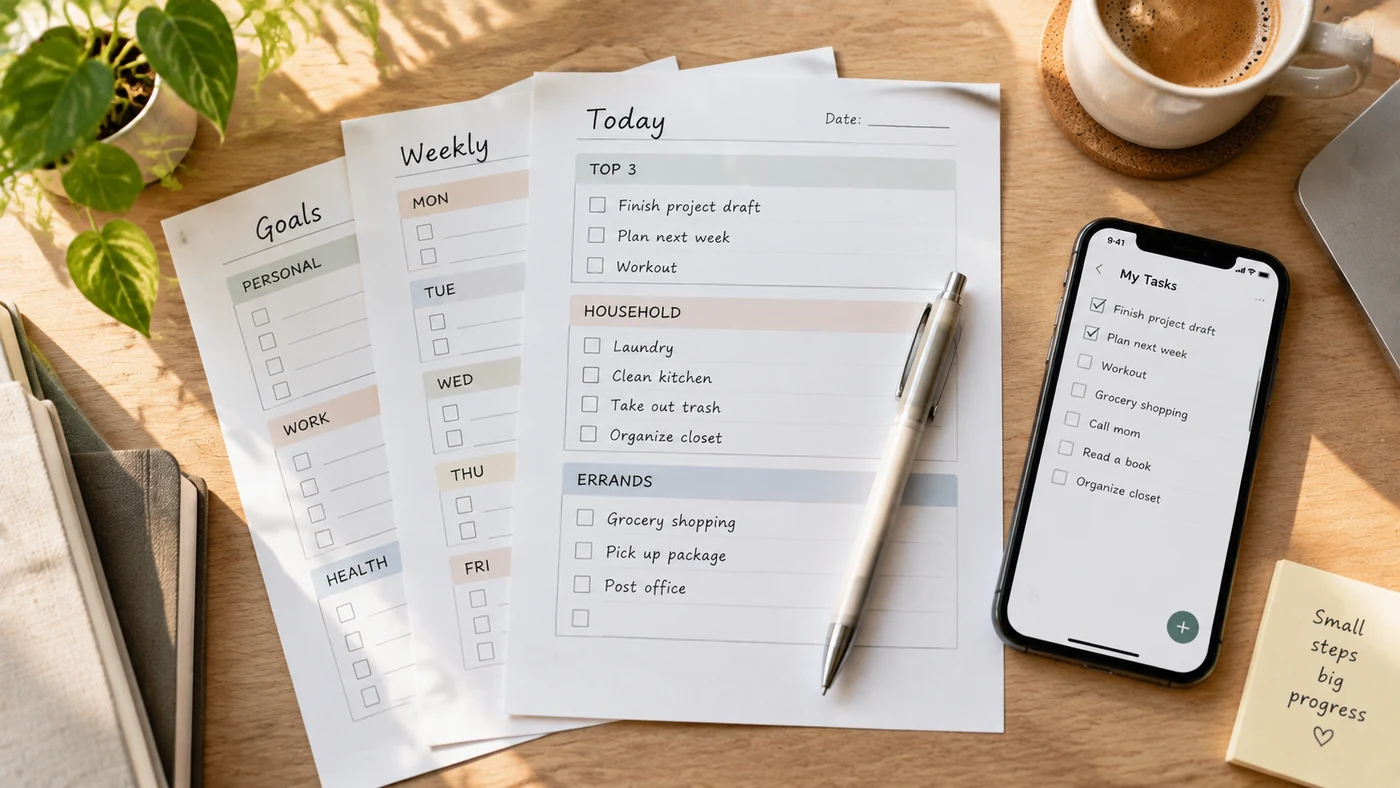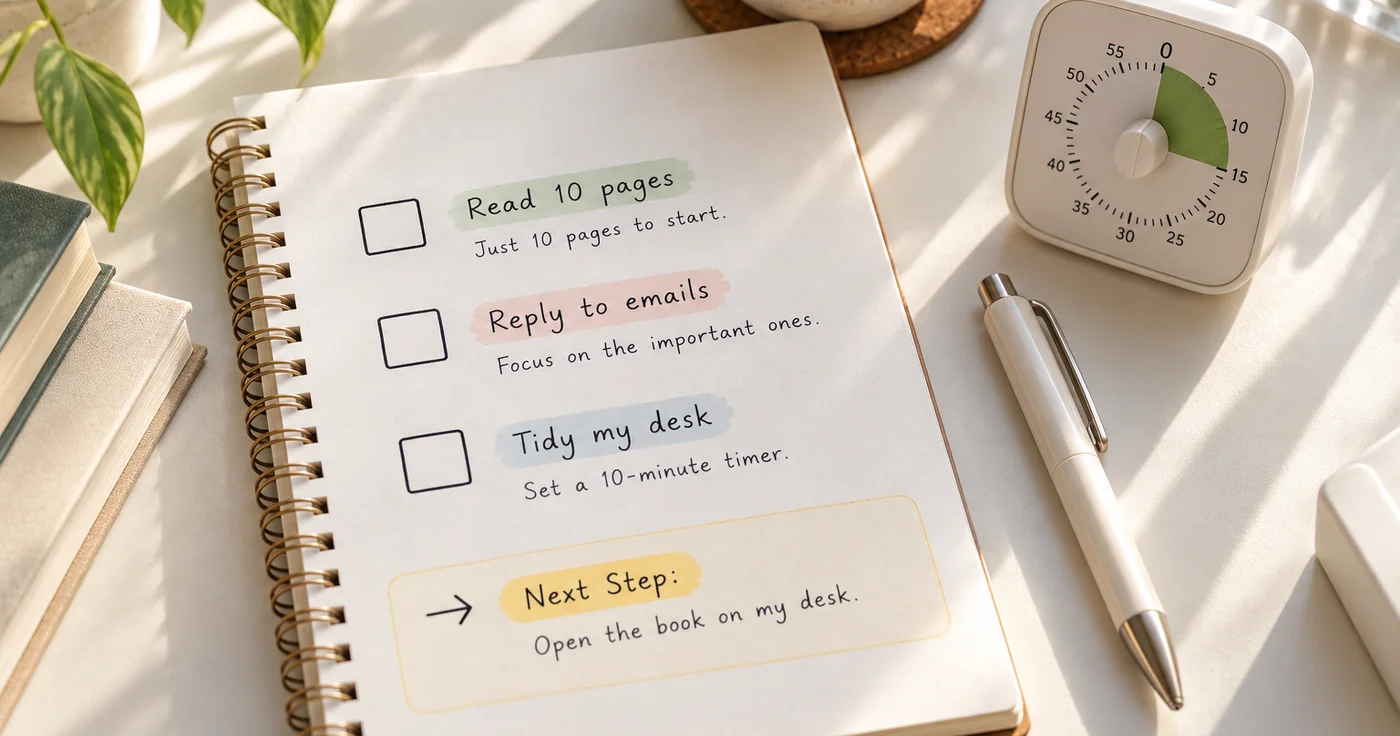
An ADHD-friendly to-do list should make the next action visible, keep today’s priorities limited, and give unfinished tasks a clear place to go. Capture everything in one inbox, choose a few items for today, and rewrite vague tasks as small physical actions. If a day goes off track, move unfinished items forward deliberately instead of rebuilding the whole list. The example below is an organizational approach—not a treatment plan or a promise that one system works for everyone.
Why a standard to-do list can feel hard to use
A list may become difficult to act on when it mixes errands, long-term projects, reminders, and tiny tasks in one undifferentiated column. Vague entries such as “deal with paperwork” or “clean up” also leave the first step unstated. This guide focuses on making the list easier to scan and act on; it does not offer medical advice or claim to treat ADHD.
Build a list around the next action
1. Capture tasks in one place
Write new tasks in a single inbox rather than deciding immediately when each one must happen. Keep the capture step quick: record enough words to recognize the task later, then sort the list during a brief planning check.
2. Turn broad tasks into visible actions
Rewrite an item so it starts with a concrete verb and describes a step you can begin. For example:
| Vague entry | More visible next action |
|---|---|
| Work on the report | Open the report and write the three section headings |
| Clean the kitchen | Put dishes in the dishwasher |
| Sort mail | Open the two envelopes marked “action needed” |
| Plan the appointment | Find the clinic’s phone number |
If a task still feels hard to start, make the first step smaller. “Open the document” can be a valid next action; the list does not need to describe the entire project in one line.
3. Choose a small number of priorities
At the start of the day, move only a few important actions from the inbox to today’s list. Add a must-do deadline first, then choose the next useful task. Leave room for interruptions and routine responsibilities. A fixed formula is optional; if a numbered priority system helps, use it as a prompt rather than a rule you must satisfy.
4. Make the list easy to see and revisit
Keep today’s actions separate from someday ideas and longer projects. Use short labels, checkboxes, or another visual marker that makes the current task easy to spot. Put the list where you are likely to look before switching to the next activity.
5. Use a restart step when the day changes
When plans get interrupted, pause for a quick reset:
- Cross off anything already done.
- Move tasks that still matter to a later date or back to the inbox.
- Remove tasks that are no longer needed.
- Choose one next action to restart with.
This keeps a disrupted day from turning into a full list-rebuilding project. For a general step-by-step approach to prioritizing tasks, see how to make a to-do list. If you prefer a ready-to-copy layout, browse the free to-do list templates and adapt one manually to this workflow.
Copyable ADHD-friendly daily list
TODAY

Must do
[ ] ______________________________________

Next useful actions (choose a few)
[ ] ______________________________________
[ ] ______________________________________
[ ] ______________________________________

If I have extra time
[ ] ______________________________________

First step to restart: ____________________

INBOX — capture new tasks here
[ ] ______________________________________
[ ] ______________________________________
Keep “must do” for a real deadline or essential responsibility, not every task that feels important. If a task is too large for one checkbox, list only its next action here and keep the rest of the project elsewhere.
When a task keeps moving forward
If the same item rolls over several days, treat that as useful information rather than proof that you need a more elaborate planner. Ask: Is the task still necessary? Is the first action clear? Does it need a time, a reminder, help from someone else, or a smaller first step? Update the task or remove it; do not copy it forward unchanged by habit.
Conclusion
An ADHD-friendly to-do list is less about fitting more tasks onto a page and more about making one next action easy to find. Capture broadly, choose a few actions for today, and give unfinished work a simple restart path.
Try the copyable layout for a few days and change only the parts that create friction. If you need clinical guidance about ADHD or treatment, speak with a qualified health professional.