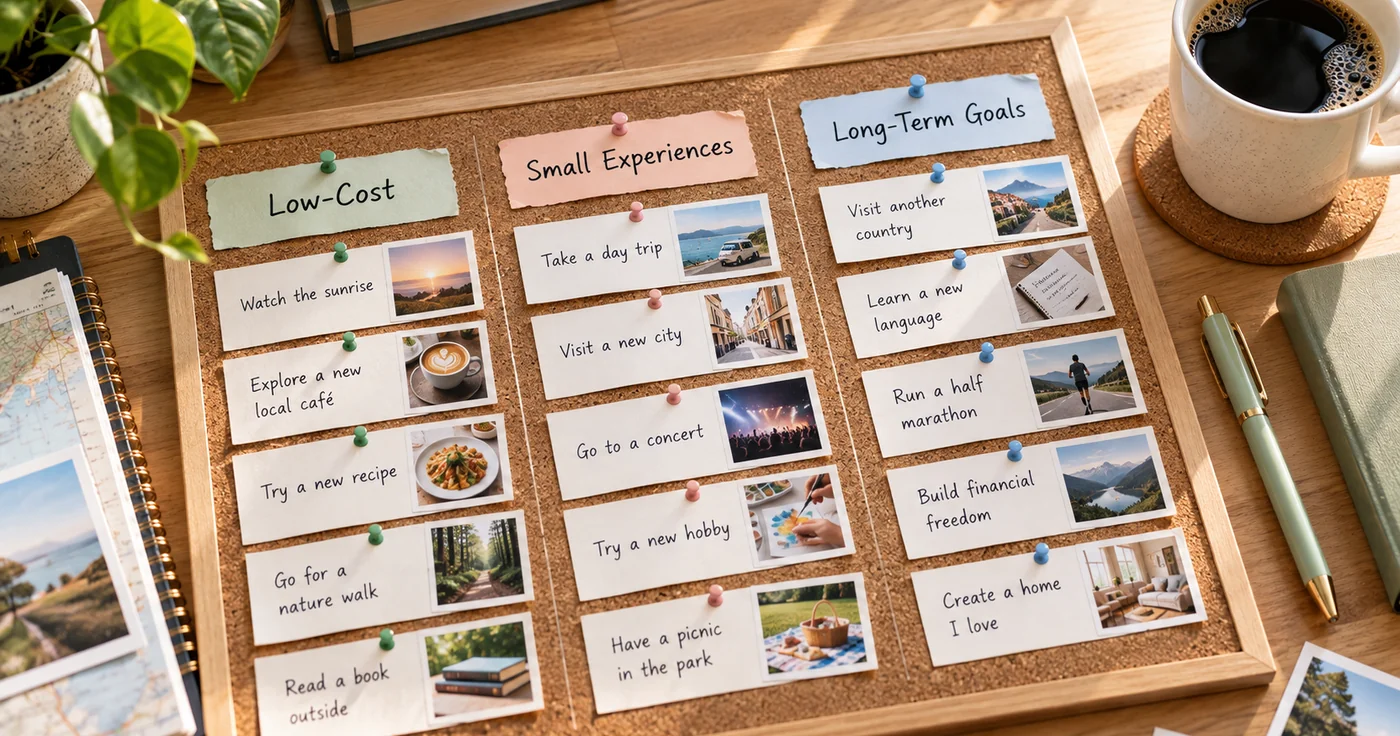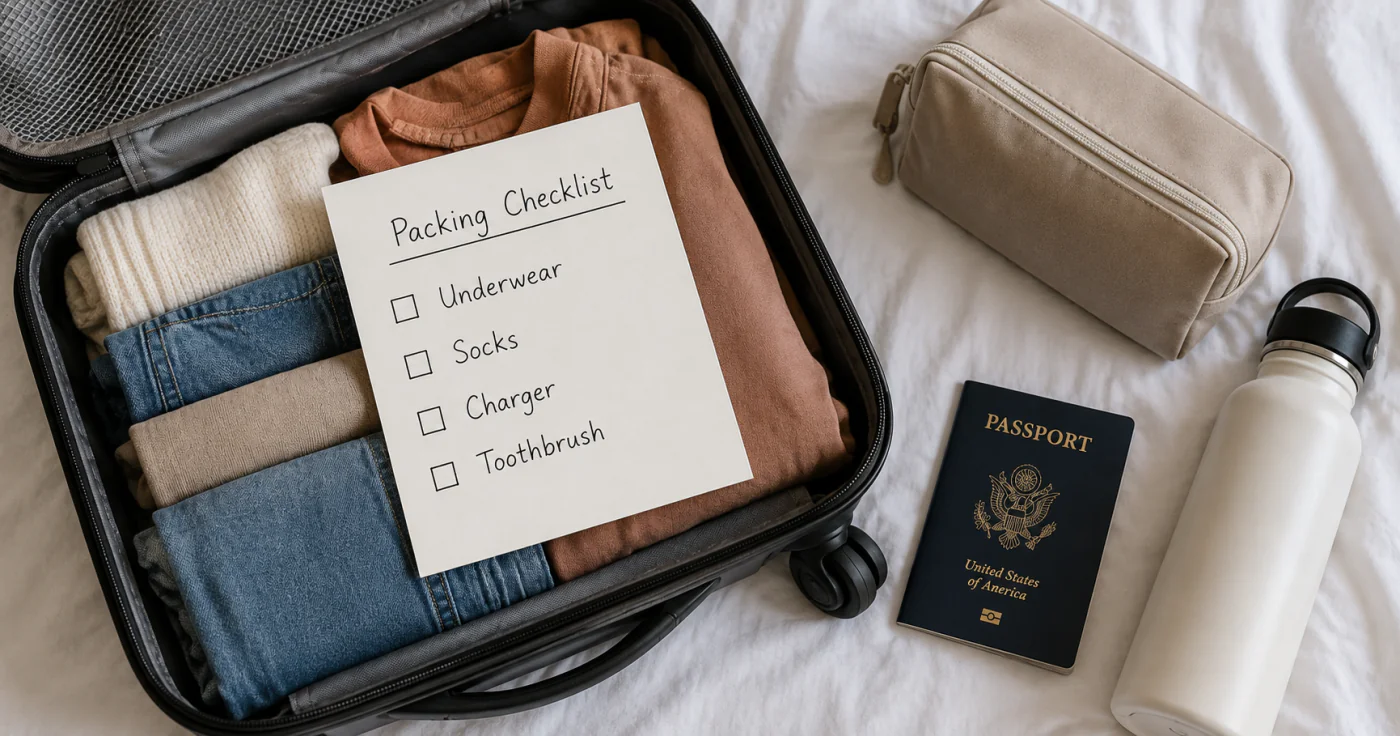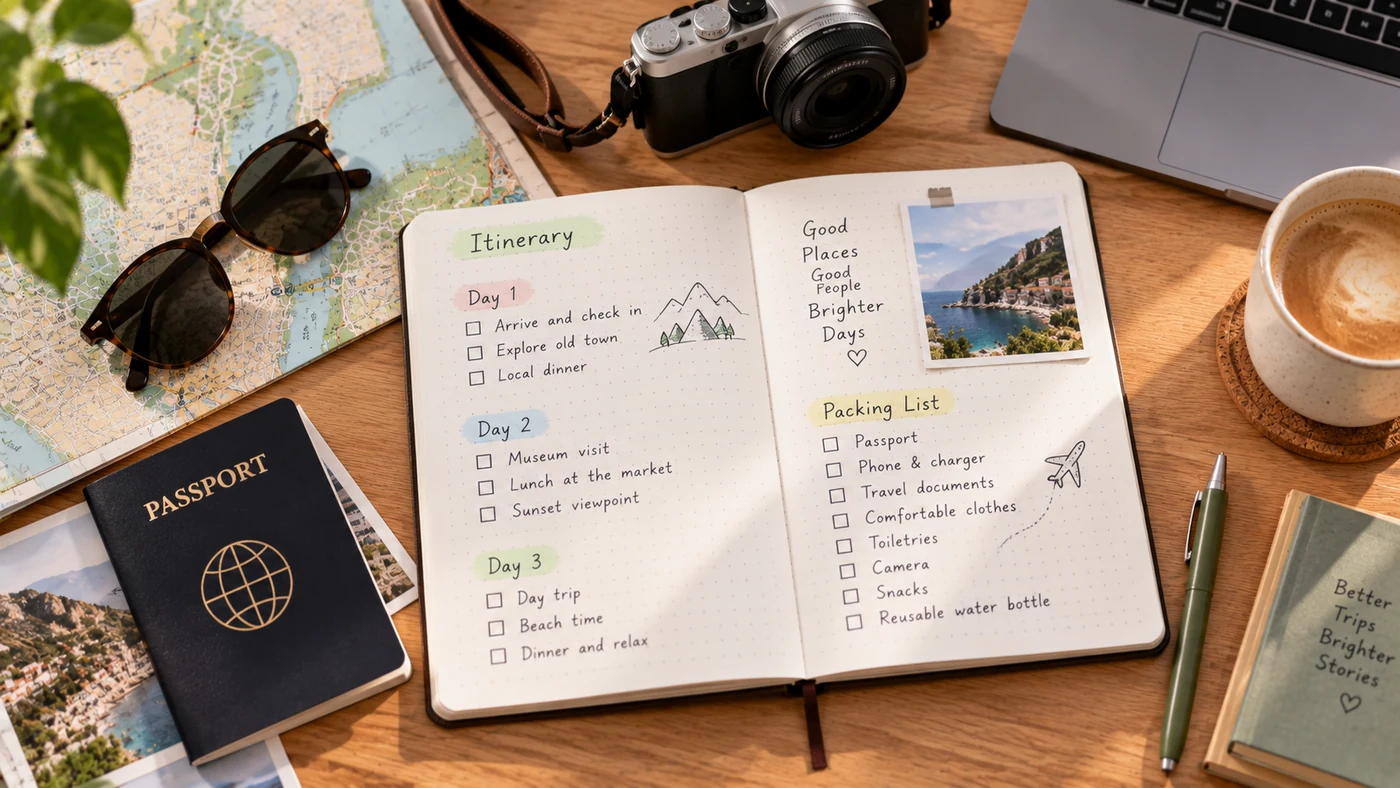
To plan a trip, decide what the trip is for, set a date range and spending limit, make the bookings that constrain everything else, then build a flexible day-by-day plan. Keep confirmations and essential documents in one place from the start.
1. Define the Trip Before You Search
Write down the purpose, who is going, possible dates, trip length, and a spending ceiling. These choices narrow destinations and transport options before you spend time comparing every possibility.
2. Check the Non-Negotiables
Before booking, write down any document, accessibility, transport, or cancellation requirements that could change your plan. Check current destination-specific requirements through the relevant official source rather than relying on a general itinerary guide.[1]
3. Book in Dependency Order
Usually book the items that control the rest of the trip first: transport, accommodation, and any timed activity that is difficult to replace. Save confirmation numbers, addresses, check-in rules, payment deadlines, and cancellation conditions with each booking.
4. Build a Flexible Itinerary
Give each day one priority activity, then add nearby options rather than scheduling every hour. Include travel time, meals, rest, weather alternatives, and a buffer after long journeys. A good itinerary makes changes easier; it is not a test of how much you can fit in.
Use this compact itinerary structure for each day:
DATE AND BASE: ______________________________
MUST-DO: ____________________________________
MORNING / TRANSIT: __________________________
AFTERNOON: __________________________________
EVENING: ____________________________________
BOOKING OR ADDRESS: __________________________
BACKUP OPTION: _______________________________
5. Run a Departure Check
- Recheck transport times, check-in rules, and cancellation windows
- Download or print only the documents you may need offline
- Confirm payment methods, medication, insurance, and emergency contacts
- Check luggage rules with the relevant carrier or transport provider
- Leave a realistic amount of time for the first journey to the airport, station, or pickup point
6. Keep One Source of Truth
Create one note with the itinerary, booking details, emergency contacts, and a short departure checklist. In EasyNotes, you can keep written details, photos of confirmations, and a separate time-based reminder together without implying calendar sync. For the final belongings check, use this travel checklist; for recording the experience later, see travel journal ideas. A simple checklist is useful for departure tasks.
Frequently Asked Questions
How do beginners plan a trip?
Start with purpose, dates, trip length, and budget. Next, check entry requirements, book the items with the least flexibility, then create a light itinerary and a final pre-departure list. Do not try to choose every restaurant or activity before the essential bookings are set.
Can ChatGPT plan a trip?
It can help brainstorm routes, draft an itinerary, and suggest questions to research. It should not replace checking official entry requirements, booking terms, safety information, availability, or current transport details yourself.
Conclusion
Trip planning is easier when each decision has a place and an order. Set the constraints first, protect the key bookings, and leave enough space for the trip to change in real life.[1]
References
- U.S. Department of State. "International Travel"