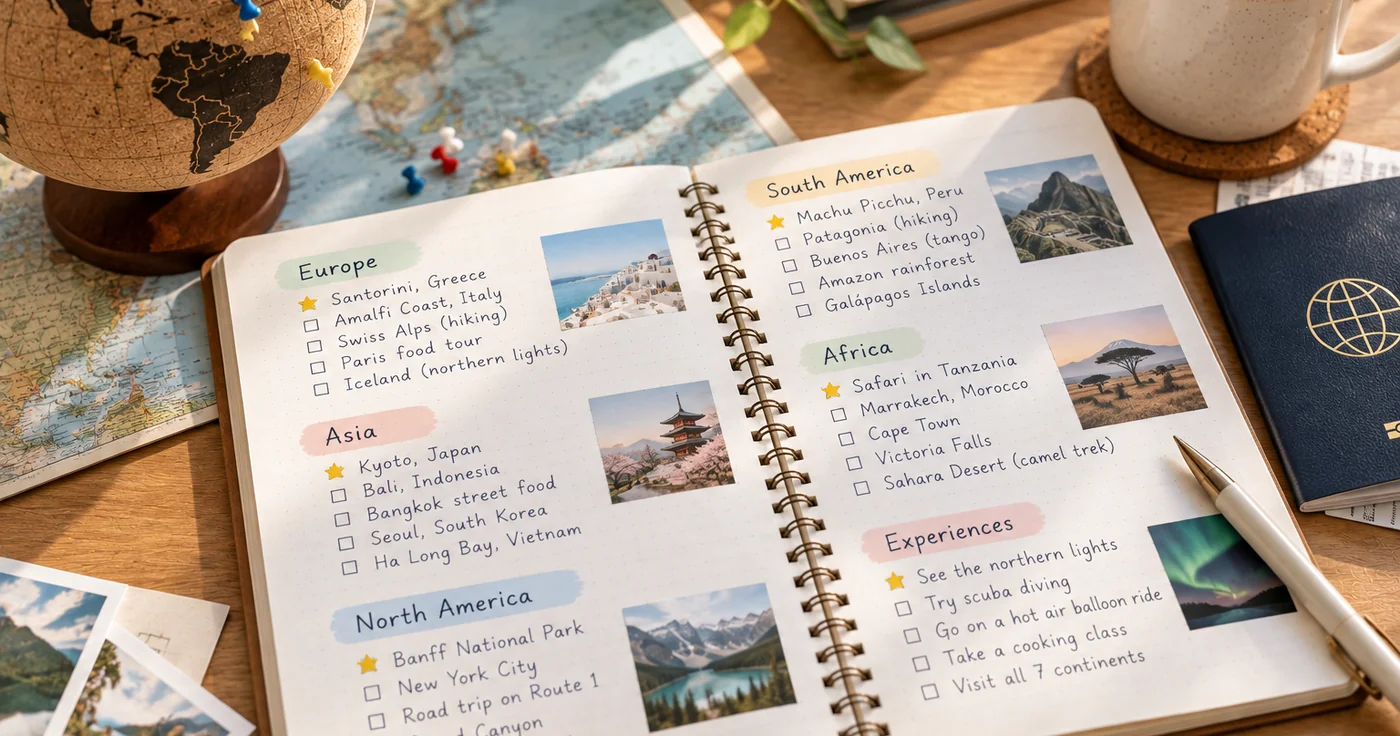
Travel bucket list ideas are places and experiences you hope to make time for, not a finished itinerary. Choose a few by trip style—from national parks and historic cities to long train rides or nearby weekends—and add why each matters plus one first step. This keeps the list useful until you are ready to plan.
Start With the Kind of Travel You Want
Instead of collecting destinations because they look impressive, choose the experience you want more of. Then add a place that fits it. A quiet nature trip, a food-focused city break, and a long-distance journey call for different kinds of planning.
Landscapes and outdoor places
- Walk among the viewpoints and trails of a national park, such as Yellowstone or the Grand Canyon.
- See a desert landscape at sunrise or sunset, with a visit planned around local access guidance.
- Spend a few days near a mountain range and choose one short trail or scenic overlook.
- Visit a coastline, island, or lake region and leave time for an unplanned day outside.
- See a major waterfall, canyon, or volcanic landscape in person.
- Choose a dark-sky destination and spend an evening looking for stars.
Cities, history, and culture
- Explore a city whose architecture, museums, or public spaces interest you.
- Visit a historic district with enough time to walk slowly rather than rushing between landmarks.
- Attend a local performance, festival, or sporting event that gives you a reason to visit.
- Take a food-focused trip: choose a region or city and build the visit around dishes you want to try.
- Visit a museum or cultural site connected to a book, family story, or subject you want to learn about.
- Spend a day in a nearby town as a visitor, using its main street, market, or public waterfront as your starting point.
Journeys worth taking slowly
- Plan a road trip with one anchor stop and room for a few spontaneous detours.
- Take an overnight or scenic train journey and treat the ride as part of the experience.
- Follow a coastline, river, or mountain route over several days, stopping in smaller communities along the way.
- Travel between two cities by a mode you do not usually use.
- Choose one region and return to it in different seasons instead of trying to see everything at once.
- Take a ferry or boat journey where the crossing itself is part of the plan.
A trip that is close to home
A travel list does not need to be limited to faraway destinations. Nearby ideas can be easier to revisit when time or budget is tight:
- Stay one night in a town within a comfortable drive or train ride.
- Visit a state or regional park you have never explored.
- Take a walking tour in your own city and learn the story behind one neighborhood.
- Choose a local place to visit at a different time of day than usual.
- Spend a weekend in a cabin, campground, or small inn that gives you a different view of your familiar region.
- Take a day trip built around one museum, garden, trail, or food market.
Make the List Personal, Not Just Long
Pick the ideas that still appeal when you picture the actual experience—not only the photograph. For each one, write down:
Place or experience:
Why I want to go:
Who I might go with:
Time and budget range:
First small step:
When I will revisit this idea:
For example, “visit a national park” is broad. A more useful entry might be “choose one park within driving distance, compare a day visit with an overnight stay, and decide whether the trails suit our group.” The first step is research, not a booking commitment.
Separate ideas by time horizon—nearby and possible soon, a trip to save for, and a long-range dream. That keeps an ambitious list from turning into pressure to travel or spend. Before booking, check current access, opening, transportation, and safety details with the destination or service provider.
When an idea becomes a real trip, use How to Plan a Trip for the practical planning stage. If your list is about books and films to experience while traveling, keep those separately in Reading and Movie List Ideas.
Frequently Asked Questions
What are some good travel bucket list ideas?
Start with the kind of experience you want: a national park or coastline, a historic city, a food-focused weekend, a scenic train ride, or a nearby place you have not explored. Add a reason and a first research step so the idea feels personal rather than copied from a generic list.
What are 10 bucket list trips?
Ten possibilities are a national park visit, a desert sunrise, a coastal weekend, a dark-sky evening, a historic-city walk, a food-focused city break, a museum trip tied to an interest, a road trip with one anchor stop, a scenic train journey, and a nearby overnight stay. Treat these as starting points, not a ranking; choose the ones that fit your interests and constraints.
Conclusion
A useful travel bucket list reflects the kind of places and experiences you care about, while leaving room for real budgets, schedules, and changing interests. Choose a few ideas from different trip styles, write down why each matters, and give just one a first planning step. Revisit the rest when you are ready to make another wish more concrete.