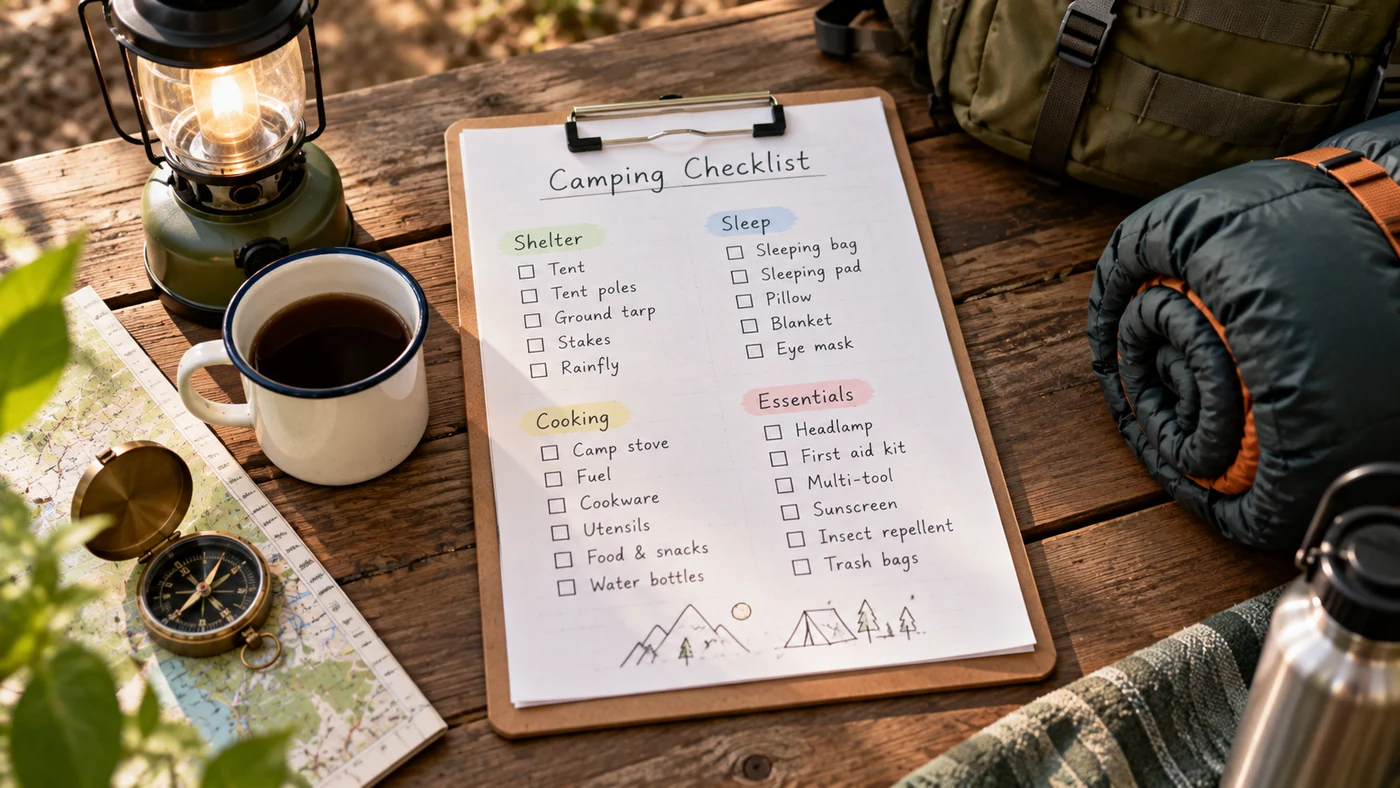
A camping checklist should match the campsite, weather, trip length, and number of people. Start with shelter, sleep, water, food, clothing, hygiene, and safety—then remove items the site already provides.
Shelter and Sleep
- Tent, stakes, groundsheet, and a way to check the forecast.
- Sleeping bag rated for expected conditions, sleeping pad, and pillow.
- Light source with spare batteries or another safe backup.
- Camp chairs or a ground cloth if the site does not provide seating
- Rain cover or tarp only when it suits the site and weather
Food, Water, and Camp Cooking
- A plan for drinking water and storage.
- Meals that fit the available cooking method and food-storage rules.
- Cup, plate or bowl, utensils, pot or pan as needed, cleaning supplies, and a waste plan.
- Cooler or other food storage when required by the site
- Matches or lighter only if fires or a stove are permitted and you know how to use them safely
Clothing and Personal Care
- Layers for temperature changes, rain protection, sturdy footwear, and sleepwear.
- Sun protection and insect protection appropriate to the location.
- Toiletries, medications, and a small towel.
- Extra socks and a dry change of clothes stored separately
- Waste bags and a plan to leave the site clean
Safety and Site Details
- First-aid supplies, navigation information, and an emergency contact plan.
- Reservation details, directions, site rules, and any required permits.
- A way to store food as the campground or local guidance requires.
Adjust the List for the Trip You Are Taking
For a developed campground, remove equipment the site supplies and concentrate on comfort, food storage, and weather. For a remote site, add the navigation, water-treatment, communication, and emergency planning appropriate to the route. Do not assume that a car-camping checklist is adequate for hiking or backcountry travel.
Departure Tasks
- Confirm the reservation, route, arrival window, and campground rules
- Check the forecast and remove clothing that does not fit the conditions
- Tell a trusted person where you are going and when you expect to return
- Charge lights and navigation devices, then pack spare power if needed
- Check that food storage, waste, and fire plans match the site rules
The National Park Service groups the widely used Ten Essentials into systems such as navigation, sun protection, insulation, illumination, first aid, and emergency shelter.[1]
For a reusable personal list, start with how to make a checklist, then use this travel checklist for general trip items and daily checklist ideas for departure tasks.
Frequently Asked Questions
What are the 10 essential items for camping?
The Ten Essentials are commonly organized as systems: navigation, sun protection, insulation, illumination, first aid, fire, repair tools, nutrition, hydration, and emergency shelter. Choose the actual items for the activity and conditions rather than treating the list as a substitute for local planning.
What should I bring for five days of camping?
Start with the same shelter, sleep, water, food, clothing, hygiene, and safety categories, then scale consumables for five days and confirm how food, water, trash, and resupply work at that campsite. Weather and site rules matter more than a fixed item count.
Conclusion
Build your camping checklist around the conditions, not a product catalog. When shelter, sleep, water, food, weather protection, and safety are covered, the rest can stay simple.
References
- National Park Service. "The Ten Essentials"